Friday, November 06, 2009

Universal Health Care Now

If you are so lucky as to have a congressional representative and you think that everyone should have access to affordable health care, now might be a good time to give them a call. Tell them to support the strongest possible health bill and ensure that it passes. [Update: It passed.]

Of course, there's a lot not to like about this bill: (a) It's not single-payer, (b) if it does end up including a public option it may be so weak as to not be worth it, (c) it doesn't do anything to break the link between employment and insurance, and (d) it probably doesn't do enough to control costs. [Update: (e) odious amendment from Stupak.]

Still, Ezra Klein and Jon Cohn seem to think it will be better than the status quo. Plus a bad law is likely to be improved, but if reform doesn't happen this year, it may be another 15 years before the political system garners the courage to try again.

There's been a lot written on this topic, but here's a tab dump of some articles I thought were worth-reading:
  • Our current system is ridiculously expensive. Why the hell do we pay four times more than Canada for basic medication?

    Ezra Klein has lots more charts like this one and he got them from an insurance CEO so they're not some pinko commie plot. There's a similar report by McKinsey Consulting that comes to the same conclusion -- Americans overpay for healthcare something like $1,600 per person a year. This New Yorker article by Atul Gawande tries to explain why things cost so much more in the U.S.

  • Despite all that cash, we don't really have better health outcomes. This report from the Robert Wood Johnson Foundation concludes: "the evidence for American superiority in quality of care (or lack thereof) is a mixed bag, with the nation doing relatively well in some areas—such as cancer care—and less well in others—such as mortality from treatable and preventable conditions."

  • The system is inhumane. This interview with Wendell Potter--a former health exec who had something of a conversion experience after witnessing low-income Americans waiting in line overnight for a free health clinic in Tennessee--is very revealing.

  • Reform should be good for small businesses. Well, not as good as single-payer would be, but if you believe the White House -- it should be better than what we've got.

Thursday, November 05, 2009

Chemistry from the Future

Here's an interesting Wikipedia nugget I stumbled across yesterday. Currently, scientists have discovered and confirmed 117 elements and arranged them into the iconic periodic table of the elements, which helpfully groups elements according to their atomic structure and chemical properties.

The element with the most protons discovered so far is ununoctium (Uuo, z=118) which is all the way over on the right side of the seventh period (a noble gas). So the natural question arises: what will the table look like when (if?) further elements are discovered? Wikipedia visualizes one possibility for an extended table (click to see larger version):

There are apparently a ton of caveats about this: (a) no one is sure in what order the orbitals are filled, and (b) the very concept of orbitals starts to breakdown above z=137 (Feynmanium) or z=173 (if you realistically model the nuclear force). To say nothing of that fact that these future elements may not be stable long enough to be observed (although many predict an Island of Stability around z=126).

Apparently the extended periodic table was first sketched out by Glenn Seaborg, and this talk shows a more familiar 'stacked' version of the extended table. Anyway, cool stuff I hadn't seen before.

(Apropos: I stumbled across this topic while researching Maria Goeppert-Mayer for work. MGM is the only other female Physics Nobel Prize winner, after Marie Curie. She did ground-breaking work on the shell model of the atomic nucleus while a researcher at Argonne National Lab. Like most pioneering female scientists she encountered just a stupid amount of sexism during the start of her career. Thankfully she stuck it out.)

Saturday, October 31, 2009

Trick-or-Treat

Here are some photos from Quinn's first (real) Halloween.


Helping carve pumpkins...


Quinn went as a ladybug - which she seemed to enjoy


She was excited about the whole "trick-or-treat" phenomenon, at least in theory. Once we actually knocked on a door she got a little weirded out, so we ended up only hitting 2 houses before heading off to a party.


And she definitely liked the whole candy angle! We dressed up as (naturally) ladybug groupies.

Wednesday, October 28, 2009

Violence in the Amazon

I meant to blog about this when it occurred, but in June tensions between amazonian indigenous tribes and the Peruvian government boiled over into violence that left dozens of policemen and indigenous protesters dead. The conflict was about oil exploration: the government is pushing for it, the indigenous groups are fighting it.

The incident itself is a little murky, with both sides claiming different stories of "who shot first." Tragically it seems possible that early, inflated reports of the indigenous death count may have led to revenge killings of captured policemen. The fallout does not seem to have resolved the underlying issues at all. You can find good round-ups of news coverage from Amazon Watch and Climate Science Watch.

A few weeks ago, a similar indigenous protest in Ecuador--this time over a new law governing mining and water rights--also turned violent, leading to scores of injuries and at least one death. The fallout from this confrontation seems to be more constructive than in Peru, with the left-wing Correa government accepting talks with the protesters and apparently agreeing to some of their demands. Again, Amazon Watch has the news round-up.

In Ecuador at least, the indigenous people are very well organized, very interested in protecting their sovereignty and (at 35% of the population) a voting bloc to be reckoned with. They are also on the cutting edge of movements for environmental protection. I am less familiar with the situation in Peru, but it is an issue I'm hoping to learn more about.

Sunday, October 25, 2009

Stone River


Stone River, by Andy Goldsworthy

I was at Stanford over the weekend for my class reunion and made a point to go see this Andy Goldsworthy installation outside the art museum. The curving stone wall is constructed in a shallow excavation, giving the impression of an archaeological dig or a vein of rock coursing through the earth's crust.

If you're not familiar with him, Goldsworthy is a British artist who uses the natural world -- sticks, leaves, stones, ice, landscapes -- as his canvas. A lot of his work is fleeting, captured only by camera, but lately he has been undertaking these massive curving wall installations.


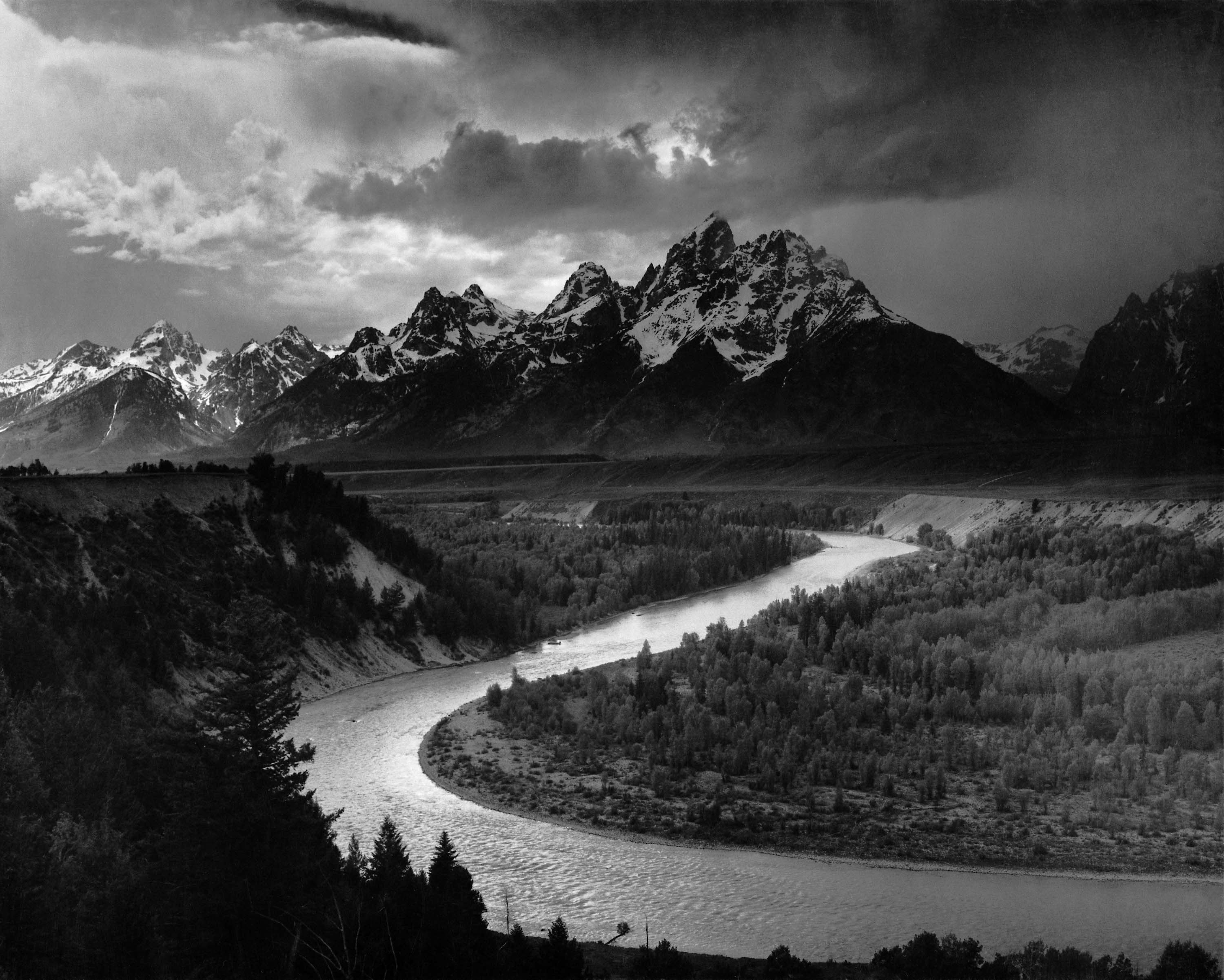
I always have the same reaction to his work. At first I am wowed by the beauty of nature depicted in his photos, but then I realize that it is not really nature that I'm seeing -- at least not in the way that an Ansel Adams photograph is about nature. There is too much human ingenuity and manipulation out front and in your face; you just don't see patterns like these in the real world. Rather his art is almost a form of abstract design, using "nature" both as the medium and the topic.

Anyway, he's fantastic. There are any number of places to see his work online, such as here or here or here.

A fun side note is that Andy Goldsworthy seems to be the inspiration for a lot of the visual design of Spike Jonze's adaptation of Where the Wild Things Are (which was really good, by the way). For example, see this photo or the structure glimpsed fleetingly at 1:30 in the movie trailer.

Monday, October 19, 2009

Old Crow Medicine Show

A few weeks ago we expeditioned ourselves across the bay to Hardly Strictly Bluegrass, a gigantic free concert in Golden Gate Park. The goal was to hear Neko Case play and then meetup with some friends for the closing show. But due to a titanic public transit fail (involving a very slow, very crowded bus and a surprisingly large number of drunken Brits), we missed Neko.

Argh. Very sad. (But of course no show is ever truly missed when you have youTube).

Anyway, we did find friends and we did catch Old Crow Medicine Show -- a string/bluegrass band from Nashville. They were pretty fun - lots of whoopin and hollerin and instrument-swappin. They crowded together in a tight cluster in the center of a big stage, like they were used to playing in elevators and unfamiliar with all that space. (Much of that night's set is up on YT, including this.)

Good songs too. The song that caught my ear during the show was Methamphetamine. Apparently their big signature song is Wagon Wheel, which was written by OCMS based on a Bob Dylan outtake. Anyway, it's nice to discover a new band - I'll have to keep an eye out for them in the future.

Saturday, October 17, 2009

Crude

I just saw the new documentary, Crude, directed by Joe Berlinger about the lawsuit brought against Chevron on behalf of 30,000 indigenous Ecuadoreans over contamination from oil exploration. The film is quite good, probably the best and most accessible introduction to the issue that you will find, although I'm not sure in how many theaters it can be found.

The film focuses on the lawyers, particularly the American Stephen Donziger who has been pushing the suit for decades pro bono (although he stands to make a hefty sum if they win) and the Ecuadoreans Pablo Fajardo and Luis Yanza. Fajardo is the star, self-effacing but quietly charismatic -- he grew up impoverished in the oil fields, putting himself through law school at night to finally lead the legal team, in the process winning international environmental awards and getting profiled in glossy magazines. Donziger comes off as your stereotypical bossy American, although you have to admire the guy's tenacity and street smarts.

The filmmakers are clearly on the side of the locals, although they give Chevron plenty of space to (attempt to) defend their record and don't hesitate to question the motives and tactics of the plaintiffs. Their overall take on the situation is pretty similar to what we learned when we visited the region earlier this year, namely: Chevron is guilty as hell (although PetroEcuador is no angel either) and the prospect of a $27 billion payout has prompted them to pull every trick in the book to avoid it.

The highlight of the film are the on-site inspections of the waste oil pits performed by the court-appointed expert, which serve as a forum for the lawyers to go toe-to-toe. Fajardo presses his case amplified by testimony from a band of local residents, while Chevron is represented by a lawyer who might as well be straight from central casting. Great courtroom drama from the middle of a rainforest.

Anyway, well worth seeing. Here's the trailer.

Thursday, October 15, 2009

Blog Action Day!

Today is Blog Action Day and the focus is on climate change. At this very instant I don't have anything deep to say about global warming except this: the U.S. is contemplating a complete restructuring of our energy system to address a very serious, but slow-moving, problem. On the crazy off-chance that the science is wrong and climate change isn't really a big deal what is the downside to having restructured our energy system away from fossil fuels and toward renewables? Not so much, really.

UCS's latest report -- Climate 2030 -- finds that policies that transition the country to a clean energy economy will end up saving people and businesses a lot of money through lower electricity bills, energy efficiency, green jobs and the like.

For those of us who live in areas with crappy air quality, reducing conventional air pollution (a potential side benefit of greenhouse gas reductions) could save tens of thousands of lives annually. Yes, that disgusting brown air actually does kill people, mostly via heart attacks and respiratory illnesses. And if you're worried about our dependence on foreign oil or happen to live near a mountain-top removal coal operation, this one is a no-brainer too.

Anyway, for more climate blogging I suggest checking out Dave Roberts, Joe Romm and Andy Revkin. Or check out this really interesting post on the climate impact of your wardrobe.

Sunday, September 27, 2009

Not infinite, but without end

I finally finished Infinite Jest, all 1079 densely-packed pages of it. Here's my review, cross-posted from goodreads. Some abstract, mild SPOILERS below - nothing specific that would ruin the book for someone (but avoid clicking the links).

--
Lo in the distant past, my cousin gave me David Foster Wallace's mondo-opus Infinite Jest for xmas. Since then it has lived on my shelf intimidating the other, littler books and taking their lunch money. I started to read it once and got through about 100 pages before my head of steam ran out. Pretty sure I've moved 10 apartments since and lugged IJ with me each time. So when I saw a bunch of folks were organizing an online reading group called Infinite Summer I figured, well, now or never.

Now having finished I think I can say I loved it. Not everything works, but when it does it is pretty memorable. The book demands a lot: the first 200 or so pages are pretty rough going and I found I could only read it when my wits were sharp or else the page-long sentences started blurring together. But once you're acclimated to DFW's strange little world and full-court-press writing style the cumulative whoosh of the plot and the words and the spiderweb of allusions becomes exhilarating.

It helps that the book is funny as hell and full of clever set-pieces (Eschaton!) that beat back the tedium. And yeah, it is tempting to call b.s. on some of his more over-written passages, but for the most part DFW uses his powers for good, not evil. He employs all his post-modern trickery in the service of a big-hearted, painfully sincere (even, sappy) story. The numerous tales of addicts bottoming-out are sometimes quite grim and desperately sad, but that only makes their slow climb to sobriety all the more compelling.

IJ is difficult, but I truly believe he meant it to be as entertaining and as humanly meaningful as possible. (As an aside, I will say that some of DFW's linguistic inventions are so good I've started using them unconsciously -- particularly the howling fantods and de-mapping.)

Finally, I hope it is not too much of a spoiler to say that the plot cuts off quite literally in the middle of the action. The novel is not infinite but it does literally have no end. The feel is of something massive and ornate--a chandelier or a grand piano--snapping its tether and falling. At first there is virtually no discernible movement, then it begins to gain a terrible speed. It glitters ominously as it rushes downward, anticipating a clamorous transformation. But the video reel cuts off just before the crash and noise.

DFW stated that the story's end "can be projected by the reader somewhere beyond the right frame." Which is true, if you carefully track the clues strewn through the book, but also a major "what the hell" moment once you turn that final page. (SPOILER-laden theorizing found here and here, among other places.)

The big idea, presumably, is that the novel's form recapitulates its themes of addiction and entertainment -- broadly, the pursuit of happiness. The abrupt ending conveys that same sense of incompleteness that returns once the buzz wears off, a longing for just one more hit. Indeed, as deeply frustrating as it is to read, a 'traditional' ending with a sense of closure would feel wrong for the novel and the protagonists. Addicts never get closure on their addictions, it is always day-to-day with the possibility of relapse.

Ultimately, I feel like I should give this like 17 stars or something. Not because it is perfect or necessarily the best novel I've ever read, but I can't but help feel tremendous respect for the story he tried to tell. Even the books flaws seem like triumphs.

Saturday, September 26, 2009

Music Downloads

Here are a few youTube tabs that have been left open in my browser for the last few weeks.

Together with Simon & Garfunkel and the John Denver Christmas album, PP&M were a big part of the sonic background to my childhood (especially Puff the Magic Dragon!) R.I.P. Mary.


Of more recent vintage, the new Mos Def album seems really strong, which is good to hear since his past two albums got such miserable reviews that I didn't have the heart to listen. Glad he's back to form.


Similarly, I haven't really listened to Pearl Jam since the mid-90s, but their new single rocks pretty damn hard I have to say.

Saturday, September 12, 2009

Half Dome views

Speaking of high sierra photography. Many years ago I visited Lick Observatory, an astronomical observatory run by the UC, just south of San Jose in the Coastal Ranges. In the lobby they had an enormous panorama of the Sierra Nevadas taken by the big telescope during the daytime. The mountains were some 150-200 miles away across the central valley, and Half Dome was easily recognizable in the center. The only online version of this image I could find was from this website, where the author had helpfully annotated the view.

In the course of searching, I also came across this amazing shot, also of Half Dome, but taken from Turlock in the central valley. Like most commenters, I wouldn't have guessed you could see Half Dome from the floor of the valley, let alone so dramatically.
On The Outside Looking In

Interestingly, the photo seems to have sparked a lot of accusations of fakery (for example, here and here and on flickr), prompting others to bust out the Google Earth proofs that, yes, this view is possible (although unlikely due to the constant air pollution and crappy visibility). Part of the confusion is stems from the fact that this photo was taken using a serious, pro-grade telephoto lens, so the scene is highly magnified.

At any rate, two examples of what can be done with serious optical systems.

Mount Whitney panorama

The Astronomy Picture of the Day a few weeks ago was this gorgeous astro-photo panorama taken from the top of Mount Whitney -- at 14,495 feet, the highest peak in the lower 48 states. Click the photo for the full-size version (photo credit: Park Service Night Sky Program).

We climbed Whitney in summer 2000 and for years I had this same (daytime) panorama up on my wall, taped together on a cardboard backing (this was pre-digital camera).

The trail to Whitney is possibly the single most crowded backcountry trail I have ever experienced, particularly given that it is 22 miles round-trip with 6,000 feet elevation gain. I'm sure we encountered over 100 people that day. The lack of oxygen at the top is fierce - I felt like I was taking 3 breaths for each step. Still, a fantastic hike!

Friday, September 11, 2009

Circum-estuarial exercise

Today's run took me all the way around Lake Merritt, pushing a grumpy Quinn in the jogging stroller.
I have to say it is awesome to have the lake -- and its running paths -- so close to our place. After 3 years of urban running in DC it feels good to break free from the stoplights and traffic and constant hazards and really run. It is too bad the lake is far too disgusting to actually swim in, but it's a pretty great city park.

Apparently the Lake Merritt Joggers and Striders Club hosts monthly fun runs with 5K, 10K and 15K options (i.e. 1, 2 and 3 laps around the lake) which I may have to check out.

Thursday, September 10, 2009

The City & the City

Here's my brief review of China Miéville's latest novel, The City & the City, cross-posted from goodreads. (In an effort to avoid spoilers, I suspect this will seem a little vague. But much of the fun of the novel is in figuring out what he's talking about, so hopefully the vagueness will not put you off reading it.)

--
It is nice to see China Miéville stretch himself a bit with his new novel, The City & the City. I enjoyed Perdido Street Station quite a lot, and while he's touching on some of the same ideas here, this is no repeat.

In some ways the detective genre has disciplined his writing. His canvas is much smaller here than with PSS, his socialist politics pushed to the background and his ornate prose streamlined. He has given himself another rich urban setting--two cities in fact, bizarrely intertwined, the setting for a murder.

And yet I am reminded of a review I once read of Jose Saramago's great novel, Blindness. The reviewer was puzzled as to what, exactly, the plague of blindness in that book represented. He concluded that Blindness was ultimately a novel about "not being able to see." I took that to mean that the book was powerfully resonant of all the horrors of the 20th century - war, genocide, etc. - but in the end abstracted beyond all specifics.

Something similar is happening with TC&TC. Miéville is careful not to make his allegory too ham-fisted. Instead he makes it a puzzle to solve - and a hook on which to hang our political obsessions. Certainly, it seems, he must be talking about the status of immigrants, or minorities, or the invisibility of the poor. Bilingual nations, multicultural cities. Or all of the above. Or something.

Like PSS, the ending is unsatisfying, but for the opposite reason. Here Miéville isn't stuck piling useless subplots atop one another, rather he has over-corrected and cuts his plot short with an ending that left me wanting more more, and not in a good way.

At any rate, I never got bored with this one, and I continue to be impressed with Miéville as a writer. I'm just waiting for him to hit one out of the park.

Tuesday, September 08, 2009

IJ Quote of the Day

"Stice, oblivious, bites into his sandwich like it's the wrist of an assailant." -- Infinite Jest, p. 627

Monday, August 31, 2009

New Town

Hey, so we live in California now! Go figure! We had a gorgeous West-coast-style sunset this evening to mark the event...

Sunday, August 23, 2009

Completism

Someone at Netflix apparently cleaned behind the refrigerator and found their long-missing copy of the Coen Brothers' debut film Blood Simple. Which means that I got to see it the other night. Which means (I think) I have officially seen all of their films. Check!

For what it's worth here's my ranking.
  • The Big Lebowski -- A+
  • Barton Fink -- A
  • Fargo -- A
  • No Country for Old Men -- A
  • Miller's Crossing -- A-
  • Raising Arizona -- A-
  • [update 2] True Grit -- B+
  • O Brother, Where Art Thou? -- B
  • Blood Simple -- B
  • [update] A Serious Man -- B
  • The Hudsucker Proxy -- B-
  • The Man Who Wasn't There -- B-
  • Burn After Reading -- C+
  • Intolerable Cruelty -- C
  • The Ladykillers -- C-
Not to say that this was such an onerous task. I mean, it's a pretty damn high level of quality, so it's not like you have to slog through many stinkers just to say you've seen them all. Blood Simple goes in the middle of the pack because it's essentially a rough draft for Fargo and a little emotionally removed, but still a great movie.

The trailer for the new one (A Serious Man) looks reasonably interesting, but mainly I am waiting on tip-toes to see what they'll do with Michael Chabon's Yiddish Policeman's Union.

[Update Dec 2010: Chris Orr posts his Coen-list here. I liked but but wasn't blown away by A Serious Man, and hope to see their remake of True Grit soon.]

Tuesday, August 11, 2009

Not even wrong

I vividly remember the following conversation from high school:
Female friend: Someday a woman will be president.

Male friend: No. Women aren't capable of leading an entire nation.

Female friend: But Margaret Thatcher was prime minister of Great Britain for many years!

Male friend: Oh yeah. Well, everyone knows that it's really the Queen who runs things over there.

Female friend: ...
For some reason I am reminded of this whenever I read about the bizarre things people are saying about health care reform. Such as the notion that if Stephen Hawking were British he "wouldn't have a chance" under the National Health Service. Or Medicare recipients protesting against "socialized medicine." Or Sarah Palin talking crazy talk about "death panels" that don't exist. Sigh.

Friday, August 07, 2009

Water Treatment

This row of obsolete water treatment towers is one of the weirder corners in DC - not far from where we live. Covered in vines, trees sprouting from the roof. In the light of a setting sun they can look downright Tolkien-esque -- like a string of abandoned elvish castles. In addition to the towers, the green grass covers over extensive catacombs which housed the guts of the treatment process. Very epic.

From 1902 to 1985, McMillan Reservoir was one of the primary water treatment facilities in the city. Now it is largely abandoned and falling to bits. The city keeps trying to find a way to develop this (extremely valuable) mid-city property (a not uncontroversial plan of action). But no ground appears to have been broken yet.


I was curious about the purpose of the towers. Apparently the process used here was slow sand filtration, and so the towers basically stored the sand. But here's the weird thing about sand filtration: all of the purification work is done not by the sand, but by a thin layer of biological organisms (bacteria, protozoa, etc.) living on the top layer of the sand. To keep the filter working efficiently you have to continually maintain this crust of organisms. The somewhat bizarre term for this biofilm is schmutzdecke (German, naturally, for "dirt cover").


Learn something new every day.

Wednesday, August 05, 2009

DC mixtape

Now that we're leaving town, it seems like a good time to put together a DC mix! Suggestions always welcome, leave 'em in the comments.

Postal Service, The District Sleeps Alone Tonight
DC is a transitory place. Many people come here for jobs and internships, put in their time and then go back to where they come from. This Postal Service song nicely captures that loneliness and dislocation--and how the brightly lit, but deserted, downtown feels after dark.

Chuck Brown, Block Party
Until recently, DC hasn't been known for its hip-hop, but you can't talk about the city without mentioning go-go. Go-go is the legendary local music subculture (with the eponymous boots) that never quite hit the bigtime. It's basically a descendant of '70s funk but with a unique backbeat to it. Chuck Brown is the guy generally credited with creating the sound.

Junk Yard Band (Live 1994)
The Junk Yard Band was apparently formed in the '80s by a bunch of 10-year-old kids from the Barry Farms projects banging on hubcaps and plastic tubs.

Fugazi, Turnover (Live 1991)
The other DC music subculture that never hit it big (mostly by design) was the DC hardcore scene of which Fugazi is probably the most widely revered.

The Magnetic Fields, Washington D.C.
I'm partial to this Magnetic Fields song, but I was only able to find this cover version (which is kinda cute anyway but lacks the cheerleader shouting of the original).

Duke Ellington, Take the 'A' Train
Ellington was born in D.C. in 1899 and launched his career here.

-- update! --

Wale, Chillin
Speaking of hip-hop, Wale is the local MC who's been getting some attention lately. He's got an album out next month and this single ft. Lady Gaga. Decent. Plus he's got a lot of DC pride. (No embedding, but you can listen here.)

Saturday, August 01, 2009

Advice of the Day

From sci-fi author John Scalzi, something to ponder:
Because one hears of writers who have made great sacrifices in order to work on their writing, including giving up jobs, friends and spouses in order to put their words into being. Does one have to be willing to put that all on the line for one’s art?

Nah. What you really need to do is cut an hour of TV watching out of your day. Seriously, now: Keep your job, keep your marriage, keep your friends, keep the kids. Just drop an hour of TV.

Because, look: If you’ve got an hour a day to write uninterrupted, you can probably manage between 250 and 500 words a day. Do that five days a week, and in the course of a year that’s between 65,250 and 130,500 words; i.e., hey, you’ve gone and written a novel. All while keeping your day job and not turning into a hermit. This is not complicated.
Hmmmmm. Might have to try that (not that I generally watch that much TV, but still...)

Tuesday, July 28, 2009

Going Back To Cali

So our big announcement is that we'll be moving to Oakland for three months starting in September. I know I've been talking about this for a while, but it is finally officially official. Laura Jean will be the interim pastor at the First Christian Church of Oakland and I'll be working out of UCS's Berkeley office. Yay!

It is hard to believe its been nine years since I moved away from the Golden State. It feels good to be going back and I'm definitely looking forward to being 3 hours from my parents and reconnecting with CA friends. (I'm also glad we're not closing the book chapter on DC just yet--I'm just starting to feel like I know the town and we have a bunch of friends who we will miss.) Plus, apparently they need some advice on how to govern the state. Always happy to help!

Saturday, July 25, 2009

Shoreline


Quinn playing on the shore of Huntington Lake. Reminds me of this excerpt from Tagore (again):

"On the seashore of endless worlds children meet.
The infinite sky is motionless overhead
and the restless water is boisterous.
On the seashore of endless worlds
the children meet with shouts and dances. "

-- "Seashore" from Gitanjali

Very postmodern

Another thought on Infinite Jest. There is sometimes a soulless tendency in postmodern art. If the artist is not careful, all their philosophizing and meta-this-and-that can lead them into the twin blind alleys of nihilism and/or smugness. Clever enough to deconstruct and poke holes, but not clever enough to build anything back up after tearing it down. It's that sterile art-gallery feel.

This is why I really love the sections of IJ that deal with Alcoholics Anonymous and the Ennet halfway house. These sections (so far) have a big beating heart. The vibe is not "there is no truth!" but rather, "truth is everywhere, and it is messy and doesn't make sense, but you can find it somehow." The section I just read (p. 343, not really a spoiler) was making the point that AA works even for addicts who don't believe in god and who think AA itself is a bunch of cliched b.s. The whole thing was charmingly meta, and also kind of old-fashioned.

It reminded me (tangentially) of Charlie Kaufman's movies (primarily Adaptation and Eternal Sunshine) where he uses all manner of narrative and digital trickery to elevate plots that are not so different than 100 cookie-cutter romantic comedies when you get right down to it.

Tuesday, July 21, 2009

The Entertainment

Lo in the distant past, my cousin gave me David Foster Wallace's mondo-opus Infinite Jest for xmas. Since then it has lived on my shelf intimidating the other, littler books and taking their lunch money. I started to read it once and got through about 100 pages before my head of steam ran out. Pretty sure I've moved 10 apartments since and lugged IJ with me each time.

So when I saw a bunch of folks were organizing an online reading group called Infinite Summer I figured, well, now or never. I'm now on page 331 (=30.7% finished). My experience so far has been approximately thus:
  • Pages 0-100: Difficult language and sentence structure.1 Very very confusing plot. Slightly pretentious, occasionally uncomfortable, intermittently funny. The ideas he bats about are interesting, but mostly... huh?
  • Pages 100-200: Starting to make more sense even as the full, overwhelming scope of it starts to come into view. I start to realize that IJ is actually quite funny, and a lot of the humor arises out of his unconventional use of language.
  • Pages 200-330: Wow - this book is fantastic! The emotions get bigger: unbearable sadness, wild hilarity, impending doom. Crucial information is revealed that helps you make sense of everything. The storyline(s) click into place. But beware: there are a lot of bizarre ideas and topics here (herds of feral hamsters, not the least).
We will see if the trend continues upward for the next 600 pages, but clearly the with-it-sticking was well rewarded. Once you get past the first 150 or so (which are the literary form of hazing) and acclimate to DFW's style and worldview, the book is fun and actually "surprisingly readable" (as the carefully selected laudatory quote on the cover points out).

DFW's default style is primarily one of overwhelming force applied to everything within sight cf. pp. 44-5:
And no matter how many times he has the Terminex people out, there are still the enormous roaches that come out of the bathroom drains. Sewer roaches, according to Terminex. Blattaria implacablus or something. Really huge roaches. Armored-vehicle-type bugs. Totally black, with Kevlar-type cases, the works. And fearless, raised in the Hobbesian sewers down there. Boston's and New Orleans's little brown roaches were bad enough, but you could at least come in and turn on a light and they'd run for their lives. These Southwest roaches you turn on the light and they just look up at you from the tile like: 'You got a problem?' Orin stomped on one of them, only once, that had come hellishly up out of the drain in the shower when he was in there, showering, going out naked and putting shoes on and coming in and trying to conventionally squash it, and the result was explosive. There's still material from that one time in the tile-grouting. It seems unremovable. Roach-innards. Sickening. Throwing the shoes away was preferable to looking at the sole to clean it.
And it goes on about the roaches. That was me, laughing like a maniac on the metro after reading that passage. He dares to be funny in ways that are sometimes a little juvenile or obvious, but combined with deep philosophical musings and close observation of his characters. And then, strung through the narrative, are extended passages dealing with addiction and depression that are just gut-punchingly sad, that make you realize the full scope of his talent.

So far so good. A final note: the online reading group is great. They post helpful summaries, give useful advice and link to other resources that are useful in making sense of it all. The comment threads are encouraging and thoughtful, rather than the cesspools of snark and one-upmanship you might expect to find.

1 And lots of endnotes. A hundred pages of 'em in tiny font. Similarly, all written discussions of IJ or DFW are basically required to have endnotes also.

Saturday, July 18, 2009

The words she knows, the tune she hums

I've totally had this song (and correspondingly famous scene) in my head for days now. I stumbled on the melody while tinkering on the piano and then out of nowhere a friend at work made a joke about the lyrics ("Hold me closer Tony Danza!") ... must be something in the air.

Thursday, July 16, 2009

Health Care Stat of the Day

The National Academy of Sciences (in a 2004 report) says:
Lack of health insurance causes roughly 18,000 unnecessary deaths every year in the United States. Although America leads the world in spending on health care, it is the only wealthy, industrialized nation that does not ensure that all citizens have coverage.
18,000 unnecessary deaths every year is a pretty crazy number if you think about it. I feel like we always hear from the media about the 40-50 million uninsured (which is also a scandal), but not this stat, which lays out the stakes for health care reform pretty clearly. 18,000 unnecessary deaths.

I've also been idly mulling about in my head about why exactly the 'free market' fails so spectacularly in this case. In theory, it is supposed to work out that some enterprising young entrepreneur will look at those 40-50 million people and see an opportunity to profit by selling them a lean, mean insurance plan. But of course it doesn't work out like that -- there is apparently no money to be made off the pool of currently uninsured people (or someone would have made it already).

Nate Silver suggests part of the reason it doesn't work this way is because the insurance game is largely about volume.
The reason the insurers are staying in business, though, is because barriers to entry in the health insurance industry are in practice quite high. Insurers benefit from pooling risk. The larger the pool, the better in terms of the insurer's ability to hedge its risk and build negotiating leverage with its providers. That makes it very difficult for a Five Guys or a JetBlue type of start-up to compete: they'll have trouble getting together enough customers to pool their risk adequately, and even if they do, they won't have as much negotiating leverage as the big guys.
Interesting! But a lack of competition means that there is no real penalty for dumping sick or otherwise unprofitable patients by any means necessary. (Read this article by Jonathan Cohn if you want to get really really angry about the inhumanity of the current system.) Which is a roundabout way of saying: we need a public option in the health care bill in order to reinject some needed competition into the market.

Tuesday, July 14, 2009

Baby's First Backpacking Trip


We took Quinn on her first overnight camping trip the other weekend up in the Sierra Nevadas. It went really well (apart from the voracious, pigeon-sized mosquitoes) and Quinn seemed to have a great time. We went with my Dad, my sister Jessica and my cousin, Casey.


We got a nifty baby-carrier. Q was a little grumpy about it ...


... but the motion rocked her to sleep pretty quickly.


The big occasion for the hike was my Dad's 60th and my sister's 30th birthdays. Since we were bringing the baby, we chose a pretty easy trip, about 8 miles round trip. I confess I was a little apprehensive about taking the baby, envisioning all the bad things that could go wrong and mentally calculating how fast I could run the four miles back to the car in the middle of the night. But everything went awesomely.


We started near Huntington Lake and headed over Potter Pass.


Sadly even a short hike doesn't really reduce the amount of stuff you have to carry. You still need tents and sleeping bags, etc.


There is a beautiful view of the Sierra backcountry (looking north toward Yosemite) from the top of Potter Pass.


On the other side of the pass, our final destination was Twin Lakes. Here Quinn dips her toes in the lower twin.


We eventually found a nice campsite at the upper twin with a really great log for Quinn to play on. Quinn had a lot of fun splashing in the lake, picking up rocks and pine cones, tramping around the campsite and shouting the word 'chip munk!' Sleeping in the tent was just about the most exciting thing ever -- so much so that we had a hard time getting her to sleep.


Casey and Quinn.


Mmmm, camp food! (Actually, my Dad cooked a typically delicious meal of real pasta with feta, tomatoes and cookies for dessert -- he doesn't go in for any of that freeze-dried stuff.)


Upper Twin Lake, with island, as sunset nears. Interestingly, the stream flowing out of this lake travels underground for quite a distance.


Happy Birthday Dad and Jess!


Breaking camp the next morning.

Saturday, July 11, 2009

Oscar Top 10

Apparently the Oscars will start nominating 10 films for Best Picture. Weird. But on second thought, maybe not such a bad idea. It all depends on what the additional five nominees are, I guess.

Mainly the Oscars need to get outside the "prestige film" box. Would it kill them to nominate a comedy every once in a while? It is much harder to make a truly funny movie than to piece together your standard historical drama, but they get no love. By my count over the past decade only 4 (out of 50) Best Picture nominees were comedies (and only one winner) ... versus like 8 or 9 biopics and a whole raft of tasteful dramas.

Also, more genre films would be welcome. Most of my favorite films of the past few years have been sci-fi or fantasy tinged--Dark Knight, Eternal Sunshine, Children of Men, the Prestige, anything by Pixar--Best Picture nominees, not a one.

Friday, July 10, 2009

Time Series Rant

For work, I often check in on the latest from the climate change skeptic/denier/contrarian camps. Since I spent several hours this week reading blogs and reports of that ilk, you will now be subjected to a rant. Sorry bout that.

<rant>
I'm not a climate scientist by any stretch, but I've become pretty familiar with most of the climate skeptic talking points -- and why they're wrong (or technically correct but off-point). I know about the sunspots and the water vapor and the Urban Heat Island effect. I've read a bit on the hockey stick and the British vineyards. For the most part this is all kind of annoying but basically OK -- healthy skepticism yadda yadda yadda -- so long as it doesn't slow down meaningful policies (which, unfortunately, it is).

Anyway the dumbest skeptic meme by far has got to be the whole "global cooling since 1998" thing. I mean, honestly? Tamino at Open Mind has a great breakdown of why this is just insane. The key plot showing the global average temperature trend (GISS data) is stolen from that post.
On one level, it's an honest mistake. In all these temperature series the year 1998 is either the first or second hottest year on record (sometimes following 2005, as it does with this data) thanks to an unusually strong El Niño that year. So if you look at 1998 and the latest data point, you might think, whoa, its gotten a tad chillier in the last decade!

But if you think about it for a second, you see that the average temperature varies quite a bit from year to year -- and yet the trend over many years is consistently and significantly upward. This is because the climate responds to increased CO2 on a comparatively long timescale, but short term weather variations will drive the temperature slightly up or slightly down year to year. Next year, random noise will likely drive the average temperature back up again. If global warming had actually leveled off or declined, it would be at least a few decades before we could say so with confidence.

In any scientific field, over-interpreting a noisy data set is a big no-no. If instead you add in a little cherry picking by taking the hottest year as your starting point then you've got yourself some industrial grade misinformation.

Which is why I always respond to this argument as a red-flag of bad-faith argumentation, particularly when it is made by people from a technical background. Stop fooling yourself: show the whole data set, fit a curve to it and figure out the error bars on your parameters. And yet... you see it all over the place. Here (Watt). And here (Pielke Sr). And here (George Will).
</rant>

Sigh. I guess this one irks me particularly since I was over-exposed to noisy time-series data sets as a child. OK. I'm done now.

[Update 02/03/12: Actually, this animated gif from Skeptical Science is one of the best refutations of this meme that I've seen.  I guess you could "argue" that global warming stopped in 1973, again in 1980, again in 1988, again in 1995, again in 1998.  And yet the temperature keeps going up!]

Tuesday, July 07, 2009

Tree and Sky


Dead tree, amazing clouds -- snapped on our hike to Twin Lakes (more on which forthcoming).

Monday, June 22, 2009

Metro Accident

There's been a terrible accident on the DC Metro today. The Post is reporting at least four six people dead and many more wounded -- the deadliest crash in the system's history. The crash, which was apparently a high-speed rear-ending, happened during rush hour at the next stop out on the Red Line from where we live.

I've been thinking about the families of the victims--who thinks their daily commute is life threatening?--and am feeling very grateful that no one we know was involved (apart from some inconvenience getting home).

Sunday, June 14, 2009

Quinn Photos

Here are some Q highlights from the past several months.
Quinn at the Race for the Cure last weekend...

The hair is starting to come in little by little...

Quinn has decided that she loooooves dogs!

Quinn looking intent and strangely fierce.


Exploring the National Botanical Garden.

At the National Museum of the American Indian.

Sunday, June 07, 2009

Automatic Baby

We just did an all-R.E.M. service at church today - pretty fun. Anyway, while I was poking around on YouTube for inspiration, I came across this:

This being one-half of U2 (bass and drums) plus one-half of R.E.M. (singer and guitar) doing a pretty great live version of U2's song 'One.' A few years ago I actually spent several hours trying to track down a mp3 of this performance somewhere online. I should have known just to check youTube.

I really like Michael Stipe's vocal here and the very R.E.M.-y harmonies he does with Mike Mills. But still: this is really Bono's song - it's hard to beat the original.

Tuesday, June 02, 2009

Best Street Sign in DC

No one is sure what the name of this street is, but it sure starts with 'H'

Sunday, May 31, 2009

Globalization and Its Discontents

My review of Joseph Stiglitz's book, cross-posted from goodreads.com. (See also.)

---
I'm a dope when it comes to economics, but my impression is that this book has been hugely influential among the anti-corporate globalization crowd. It came out shortly after the Seattle WTO protests and soon popped up on the bookshelves many of my development-minded friends.

It's easy to see why: Stiglitz is about as prestigious a development economist as you are likely to find--Nobel Prize winner, former chief economist at the World Bank, by some metrics the most cited economist working today. So if he says something has gone wrong with globalization, people listen.

His message here is very reform-minded--he thinks globalization is here to stay--but his arguments should resonate with anyone concerned about poverty in the developing world, or about jobs here in the U.S. His basic thesis is that the IMF has drifted from its Keynesian roots and been hijacked by a narrow economic orthodoxy that rabidly pursues privatization, market liberalization and low inflation to the detriment of all other social and economic goals. The attack of the market fundamentalists!

He notes that this prescription for economic growth, dubbed the 'Washington Consensus', is far from the consensus position among economists. Indeed, it seems as if the IMF's policies are designed for the benefit of the financial elite, rather than with the goal of achieving broadly-shared prosperity in the targeted countries. Hence the IMF's focus on inflation rather than unemployment, and their relentless drive to open up markets to foreign investors rather than fostering local entrepreneurship.

The results have been disastrous for developing nations from Russia to East Asia to Africa. Indeed, he makes the point that globalization has been a net loser for sub-Saharan Africa and that countries who have resisted the IMF have been more successful on average than those who didn't. (Interestingly, he mostly lets his former employers at the World Bank off the hook.)

If you are looking for a popular introduction to macroeconomics, look elsewhere. This is more like an extended, wide-ranging hallway conversation with an eminent professor. Still, I learned a ton about how these institutions work and how they might be made accountable to the billions of people impacted by their decisions. The general discussion about nurturing and building economies are also hugely relevant given the recent economic collapse.

Saturday, May 30, 2009

Sotomayor

I highly recommend reading this terrific post by Julian Sanchez on Sonia Sotomayor and the opposition to her nomination coming from Limbaugh, Gingrich and a swarm of lesser pundits.
Look, it’s not racist to oppose a Latina judicial nominee, or to oppose affirmative action, or to point out genuine evidence of ethnic bias on the part of minorities. What we’re seeing here, though, is people clinging to the belief that Sotomayor has to be some mediocrity who struck the ethnic jackpot, that whatever benefit she got from affirmative action must be vastly more significant than her own qualities, that she’s got to be a harpy boiling with hatred for whitey, however overwhelming the evidence against all these propositions is. This is really profoundly ugly. Like Yglesias, I don’t think I’m especially sensitive to stuff like this, or particularly easily moved to anger, but I’m angry.
Many conservatives argue, now that we have ended segregation, we also need to end affirmative action and strive for a race-neutral society. On this level playing field, the claim goes, qualified women and minorities will be able to successfully compete with white dudes. I think there is still a need for affirmative action, but I think the vast majority of conservatives make this argument in good faith.

But here's the thing: when an obviously superlative Latina is tapped for the nomination she still -- still! -- has to put up with crap like this. Comments about how she only advanced thanks to affirmative action, that she's unqualified, that she's not very bright -- always presented without a scrap of real evidence. I mean, how much more brilliant or qualified do you need to be to be judged on your merits?

This is the continuing power of racism in our society. And it's not just crazy folks on the internet -- this is coming from the grand poobahs of the Republican Party and movement conservatism. There is a lot that's fair game with Sotomayor: call her a liberal, call her a judicial activist, bash her rulings, whatever. But, just as with Roberts and Alito, that's not going to be enough to sink her nomination.

Sunday, May 24, 2009

Ecuador tidbits

Just to write them down before they fade (amazing how quickly that happens), some final thoughts on our trip to Ecuador.
  • Southern Stars. It being my first trip to the southern hemisphere (albeit, barely) I was looking forward to seeing the southern stars. Unfortunately, the only nights spent outside of Quito were spent in the rain forest, where (it turns out) it rains a lot. We could see the stars one night while we were driving, and it was definitely neat to see Orion in the northern sky, but no primo star-gazing opportunities. Reason to go back, I guess.

  • Volcán. The Andes mountains are really cool and we got to see several active-ish volcanoes. In addition to Guagua Pichincha--which looms over Quito and erupted spectacularly in 1999--we also spied El Reventador and Sumaco from the air on our flight to Coca and we drove right past the base of Tungurahua en route to Baños (which owes its thermal hot springs to the volcano's proximity).


  • Chevron. In this week's Economist you can read the basic pro-corporate defense of Chevron. The authors do not seem to have bothered to interview anyone from the other side of the lawsuit and several of their assertions do not pass the smell test IMHO. In particular, the idea that Ecuador made tens of billions from oil exploration while poor, pitiful Texaco only made $500 million is laughable and inconsistent with other facts presented in the article. Chevron Pit has the full rebuttal here.

  • Organize! We heard an interesting bit of history from Yury, our guide, about Monseñor Leonidas Proaño. Before the land reform laws of the 1960s, Ecuador's poor were essentially serfs, bound to the large haciendas. When Proaño became bishop of Riobamba in 1954, a region that was poor and mostly Quichua-speaking, he began to preach liberation and agitate for social justice. He even convinced parts of the Church to give up their large land-holdings. He also founded something called the Popular Radiophonic Schools, which trained leaders and community organizers. According to Yury many of young volunteers from the Radiophonic School are now leaders of the national indigenous rights organizations or are making policy in the national assembly and the Correa government.

Wednesday, May 20, 2009

(V)OTE

Giant version of one of those ubiquitous Shepard Fairey HOPE posters - overseen at the corner of Kenyon and Georgia here in DC. This last weekend, my sis and I visited the National Portrait Gallery where we saw the "official" portrait version hanging there too.

Saturday, May 16, 2009

Anathem

I just finished Neal Stephenson's latest novel, Anathem. Quick take: it's great. Here's my review cross-posted from goodreads.com.

---
Mystery writers must strike a careful balance: no one likes a mystery that is too obvious or one that is too obscure. Similarly, science fiction authors have a mandate to bring the science and make it plausible (their readers are, after all, total geeks). But fans are also looking for something new and interesting. So that's the sci fi game: "predict" what the major scientific breakthroughs will look like for the next millennium or so, but make them seem "real" ... or else your nerdy fans will turn on you.

Most authors just gloss this over and focus on the plot. Enough about the physics of warp drives ... explosions! After all, it's a lot to expect a mere fiction author to put forth a coherent theory of wormhole dynamics or the many-worlds interpretation of quantum mechanics just as a prerequisite for blasting some aliens.

And yet Neal Stephenson, bless his heart, seems determined to try. He has always reveled in cool ideas themselves and will happily spend pages explaining how public-key encryption works or what nano-bot power sources might look like. With Anathem he has taken this urge to its obsessive extreme and constructed a fully detailed, 7000-year intellectual history as a backdrop for his story.

I can see how this book might not be for everyone. The book starts slow and at first lacks the usual Stephenson pizazz. There are no kitana-wielding pizza-delivery-men here, just a bunch of monks (although some can indeed kick ass). The sheer volume of alternate vocab words can be daunting. (Note: be sure to read past page 200 before giving up -- the plot picks up significantly after that point.)

But in many ways, Anathem is Stephenson's most confident and mature novel. His earlier books have a magpie quality to them (particularly the Baroque Cycle) -- jumping willy-nilly between multiple characters, plotlines and concepts. Here he sticks to a single narrative and builds systematically to a gripping finale. While it is not perfect, I enjoyed it tremendously and would definitely recommend it to anyone who likes a good spec fic speely.

Friday, May 15, 2009

Bike to Work

Today was national Bike To Work Day. I went with some co-workers to the DC event and we got our picture taken with Secretary of Energy, Steven Chu.
Apparently Dr. Chu, in addition to being an enthusiastic proponent of sustainable energy, is an avid biker ... and a good sport about random people wanting to take a picture with him.