Sunday, August 02, 2015

Crowdsourcing Air Quality


Last year as I was contemplating a Silicon Valley job, I was brainstorming possible data science projects. I thought it would be cool to try to estimate air pollution levels from existing data sets. (Growing up in the Central Valley, I think conventional air pollution is a huge looming environmental health problem that doesn't get enough attention.) I figured you might be able to extract at least some air quality information from geo-tagged and time-stamped online photos of the sky. I ended up getting a different job, but found some pretty sweet ongoing projects.

Naturally, a quick search showed that someone had already thought of this idea. SkySnapper is a fairly recent project that enables people to upload images of the sky with the goal of estimating AQ, although they don't seem to have done much with the concept so far. More fully developed is this project from a research team at USC. They have already developed an Android app and done the hard work of building a mathematical model in order to correctly extract air visibility information from a photograph (pdf). Although their concept seems sound, it doesn't appear that many people have submitted data through their app.

Smartphone photos aside, the broader world of air pollution monitoring is also being transformed by big data and citizen science concepts. A group of Berkeley undergrads are developing personal PM2.5 monitors -- a very cool idea, but apparently still in development. Similarly, Smart Citizen helps people set up environmental monitoring networks in their cities using Arduino-controlled hardware. And the startup Aclima has been getting some good press lately collaborating with Google to study indoor air pollution and put monitors on the Google Street View cars. Cool stuff, but of course the big challenge will be scaling up these concepts and understanding the data well enough to make meaningful contributions to science or policy. Something for when I get a chunk of free time...

Update: also this.

Monday, June 08, 2015

Inherent Vice

Thomas Pynchon's Inherent Vice was easily one of my favorite books from recent years. It was great to see him working again in the detective genre and putting forth a funny, (relatively) accessible story without sacrificing the dense, tangled socio-cultural commentary that makes him great. The thought of a P.T. Anderson film adaptation of the allegedly unfilmable Pynchon was one of those little nerd-convergences the filled my heart with both joy and the vague fear that PTA would somehow screw it up.

I finally got around to seeing the film version last night (about six months behind the pop culture cutting edge as per usual) and it most definitely was not screwed up. The film adaptation is an impressive merging of two artistic visions, and if nothing else, a triumph of condensation. The film inevitably has to scrap a bunch of characters and subplots, but in 2.5 hours it hits most of high points and, most importantly, nails the tone.

Joaquin Phoenix was terrific and basically carried the movie. Brolin and Reese were both pretty funny, and and unlike a lot of people I thought Owen Wilson actually wasn't that bad. I mean he's got the stoned surf dude thing down pat. The plot streamline means that a lot of great minor characters only get a few scenes, like Michael K. Williams and Benicio del Toro (also, man, Martin Donovan got old.)

On the big picture, I mostly agree with this Stephen Maher review in Jacobin, which locates the film as part 3 of PTA's ongoing interrogation of 20th century America, following There Will Be Blood and The Master. The theme here is the swift ending of Sixties idealism following Manson and Altamont, and the co-optation of the counter culture by neoliberalism. Maher also highlights why the Big Lebowski comparisons miss something important:
"As opposed to an Odyssey-style film of the kind the Coen brothers endlessly remake, in which the main character has to go on some quest to transform himself in order to accommodate the “home” he returns to at the end of the journey, this film focuses on how the world is changing, imposing on everyone the need to become something new — though they know not what. The bottom line is that there is no home, and Doc cannot simply return to his life as a stronger and wiser man (as in The Big Lebowski, among countless others)."
For me the film seemed harsher than the book in its portrayal of this reaction. Perhaps some of the parts that got left out were some of Pynchon's subtle invocations of community, the way people still supported each other despite the circling paranoia. This is clearest in the how the film and the book treat the final scene:
At the end of the film, Doc and Shasta literally appear to drive into an abyss: they are apparently in a car, but outside the window all we see is homogenous darkness — no scenery, other cars, etc. — while Shasta mentions how it feels like “the whole world is underwater and we are the only ones left.” Even Sortilege’s narration has disappeared.
It's a cool scene, but worth noting that Pynchon's take on it is vastly different. In the book Doc is driving alone (it's less clear if he gets back with Shasta), but falls in with a caravan of other drivers banding together for safety as they make their way home through the fog. "It was one of the few things he'd ever seen anybody in this town, except hippies, do for free." Far from the romantic couple being the only ones left, it's an almost subliminal vision of community, battered by the neoliberal riptide, but still existing somehow. It's a lovely scene, reminiscent of a few passages of Gravity's Rainbow, and maybe even Steinbeck's Cannery Row (another odd collection of beach bums led by another 'Doc').

Anyway, here's my goodreads review of the book (written pre-movie):
Loved it. Inherent Vice is Thomas Pynchon at his most "groovy" and accessible. He has dialed back the abstract philosophizing and limited his obscure cultural references to pop songs and films, and the result is a hilariously readable shaggy-dog LA crime story. In some circles silly-Pynchon is inherently less important or prestigious than serious-Pynchon, but I don't buy it. There is actually a lot of emotional and political weight behind this story, which only rises to the surface in the book's final chapters.

A companion piece to Pynchon's other "accessible" California novel The Crying of Lot 49, this one is also a warped take on the traditional mystery novel. Lot 49 was set at the beginning of the 1960s and directly inverted the form of the genre -- starting out in the clear certainty of mid-century American normality and adding sex, drugs, coincidences, conspiracies and paranoia with each chapter until by the end the protagonist is cut loose from everything she can trust. By contrast, Inherent Vice is about the closing of the 60s and the last gasps of that strand of idealism. The story involves hippie pothead PI Doc Sportello, investigating the disappearance of his ex-girlfriend's billionaire lover. In the grand tradition of Chinatown, he digs up an ugly conspiracy that involves drug smuggling and the LAPD, prison gangs and right-wing politicians.

The other touchstone here is naturally The Big Lebowski. You can draw a lot of parallels between Sportello and The Dude. There are a lot of drug and stoner jokes here, most of them pretty funny. Many of the other Pynchon hallmarks are found too, like the bizarre names and goofy song lyrics, but unlike a lot of his other novels, the dialogue and character building are put in the foreground. (At times he even reads a bit like Elmore Leonard.) This time around he doesn't subvert the detective noir genre so much as revel in it, adding characters, plot twists and double crosses right and left.

Ultimately it becomes clear what he's getting at and it stands as his clearest statement of solidarity with the freaks and weirdos who build "temporary communes" to stand against the machinery of death and to "help each other home through the fog." As one minor character puts it, "what I am is, is like a small-diameter pearl of the Orient rolling around on the floor of late capitalism-- lowlifes of all income levels may step on me now and then but if they do it'll be them who slip and fall and on a good day break their ass, while the ol' pearl herself just goes a-rollin' on.”

Wednesday, March 12, 2014

Cha-lang-a-lang-a-lang

I've been too busy packing for the apocalypse, hence no time to blog. Thankfully Janelle Monáe continues to have you covered on that front.

Sunday, February 23, 2014

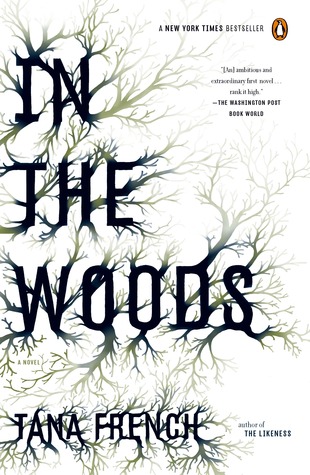
In The Woods

I just finished reading Tana French's mystery novel, In The Woods. It was pretty cool, and you can read my review of it on goodreads. Lots of spoilers, so if you're thinking of reading it, don't click!

Friday, February 14, 2014

On the desert plains all night

Dark but pretty. "Song for Zula," by Phosphorescent.
If you like this you should definitely hear Emmylou Harris's Wrecking Ball album. Just amazing. It has the same dreamy, shimmery, high desert vibe you get from The Joshua Tree (both albums were, not coincidentally, produced by Daniel Lanois).

Monday, February 10, 2014

Linger

When I was a kid we had a set of World Book encyclopedias, of the sort I'm not even sure you can buy anymore. I used to sit down and just read random volumes, usually starting with an article I had to look up and getting intrigued by the next one in alphabetical order. The same thing happens nowadays with wikipedia, but it's a little more thematic. With an encyclopedia the path was different and often I would find myself fascinated by a topic I would never have thought to look at. Rembrandt -> rhubarb -> RNA -> rock 'n' roll -> Russian. As a result I always had a bunch of facts and names and pictures floating around in my head, but I couldn't really place where I had got them from. In fact, for a long time I didn't know the name of my "favorite" work of art. I had stumbled on it one day, somewhere in one of those 26 volumes, and loved it instantly. I remembered a girl playing alone in the middle of a town square bathed by a harsh afternoon light, but not the name.

Art nerds may have already recognized the piece from my description: Mystery and Melancholy of a Street, painted by Giorgio de Chirico in 1914. (No doubt it had been the "D" volume where I encountered it.) Not sure why that particular image stuck with me. I'm sure I loved the cinematic drama of the scene and the palpable sense of menace. I had no idea who painted it or what it was called, but I carried the shard of memory with me for years. Of course, once the internet rolled around it took just a few quick searches to figure out who the painter was.

I've noticed that there is sometimes a disconnect between the critical opinions of my brain's higher and lower reasoning components. My conscious brain might decide that such and such book, movie, music, art is a favorite. And maybe it has good reasons for thinking that, but probably at least part of it is because it was recommended by a friend, or a critic said it was good, or I admire the author's life story, or I want to signal sophistication to my peer group, etc. And sometimes my lizard brain says, "no. what you really actually like is actually this other thing instead. see I'll show you."

This isn't even so much a "I like action movies but I pretend I'm really into Tarkovsky" sort of thing (although I do like action movies). It's more that certain works of art that I hadn't given much thought to just linger in the mind, coming unbidden into the forefront thanks to some subterranean resonance. I've been trying to pay more attention to that lizard brain, to actively remember art that lingers, as opposed to what is consumed, appreciated and forgotten. I'm trying to get back the feeling of that anonymous painting.

An example. If you've never seen Jim Sheridan's "In America" it's pretty good and well worth watching. It has strong performances from Samantha Morton and Djimon Hounsou (transcending a cliched "magical negro" role) and, especially, the two little girls. It's noways the best film I've ever seen (fore-brain speaking), but it has some nice moments. And there is one scene in particular that has lingered. The movie concerns an Irish family who has immigrated to NYC and one night they head to the fair and the father decides to play one of those carnival games where you throw a baseball through a hole and win a prize. The family is dirt poor and just scraping by, but he lets himself get drawn into a "double-or-nothing" dare after missing the first few throws, and pretty soon the price has doubled and re-doubled until the next missed throw will cost them next month's rent.

It's contrived, but damn if it doesn't pack a punch. For me it was a tremendous dramatization of the way we live -- all of us, not just poor immigrants -- perched on the precipice. We are all one moment of recklessness, or bad luck, or bad driving, or a slip of the tongue away from disaster. When I go to the top of a tall building to admire the view there is always one Evil Neuron in my head that brings up perverse thoughts of jumping. Watching this scene is like a five-minute conversation with the Evil Neuron. It makes me want to take a deep breath and hug my family members. (Unfortunately the scene in question isn't available on YouTube, but here's the trailer for the film.)

Here are some more lingerers. The two books that I have spent more time thinking about over the past few years are Little, Big by John Crowley and The City and the City by China Miéville. At the time I read them I thought "interesting but flawed" and now I can't get them out of my head. The same thing goes for Michael Winterbottom's film Code 46 (also starring, ta da, Samantha Morton), John Greyson's Lillies, and more. Oddly unforgettable, all of them.

Sunday, February 09, 2014

Libre Soy

Like most other kids in the known universe, my daughter Quinn has proven defenseless against the charms of Frozen, and in particular the big show-stopper sung by Idina Menzel -- "Let It Go."
I've been trying to blog new music each week, and if I'm honest, this is the new music that has been ringing through our house this past month -- Quinn luuuvvvvs this song (and the Snowman one). We listen to the spanish version ("Libre Soy"), we listen to the various adorable versions sung by little kids, I catch her singing it to herself while she's playing. She's even started writing her own stories starring Elsa and Anna (her first fan fiction?).

All of which fills me with great parental joy (the princess thing notwithstanding). It's always exciting when your kids are genuinely excited about something (whatever it is). And up until this point Quinn's list of projects and interests and obsessions hasn't really included much music. Which is fine of course, but you can bet we'll be encouraging this going forward.

Friday, January 31, 2014

I am nothing without pretend

MD's two-piece Wye Oak play "Civilian" live on the radio. Drone-y and buzz-y and closes with a sweet guitar solo.
You can download the album track here.

Thursday, January 30, 2014

Young Earth Blues

A couple of years ago I got into an animated discussion with an acquaintance who is an honest-to-God young earth creationist.  He's a young guy, a huge computer geek and really smart.  In fact he's geeky enough actually sit down and add up the dates in the Bible to get his own estimate for the biblical age of the universe, and to defend his estimate in a highly detailed manner.  Like Bishop Ussher and Isaac Newton before him he estimated that our universe was more or less 6,000 years old.

Clearly this was not the type of conversation I had in grad school, but in a lot of ways this guy was "my people."  I recognized in him a lot of the same mental habits and personality quirks that you find in people who do science for a living. Geeks like me, in other words. But for various reasons he had never really studied much science and had instead read widely on intelligent design and creationism.

The interesting thing about our conversation is that he wasn't really opposed to the idea of evolution. He basically admitted that going forward into the future, species would slowly evolve in response to the environment and natural pressures. The sticking point really was that 6,000 year old universe, and the need to defend a "literal-factual" interpretation of the Bible. Disbelief in macro-evolution flowed directly from there simply not being enough time to get it done. And he's right!  If the universe were only 6,000 years old there wouldn't have been time for humans to evolve from simpler life-forms.

Still, my friend had the whole ID/creationism talking points down pat, starting from the old parable about finding a watch on the beach and "knowing" that it must have been designed rather than evolved. Of course, relying on human intuition about how the world works is pretty much why we believed the Sun went around the Earth for millennia.  (I mean, just look at it! It goes in a circle, right?) My mind naturally rushed to the astronomical objections to a young earth, i.e. the known distances of objects that we can see and observe. (Of course there are LOTS of good arguments against creationism, this was just what came to my mind). I mean, the vast majority of stars in our own galaxy are farther than 6,000 light-years away, to say nothing of distant galaxies or the CMB.

For example, the remnants of the stars that went supernova and were observed in A.D. 1006 and 1054 are located at a distance 7,200 and 6,500 light-years, respectively. Their observation by ancient astronomers, plus the light travel time from the object, already puts the age of the universe older than 6,000 years.  The center of our Milky Way galaxy is at 27,000 light-years. Every time we observe objects orbiting the central black hole we are looking at the universe as it was 27,000 years ago.

Obtaining distances to even more distant objects is a little bit complicated and not necessarily intuitive to a layperson. Let's just say it involves a lot of calibration. (In fact, determining the rungs of the "distance ladder" is one of the great accomplishments of modern astronomy.) But in case you don't buy all that calibration stuff, we have direct, "intuitive," geometrical distance measurements (via parallax and the Hipparcos satellite) for most bright stars within 1,600 light-years of earth (and the recently launched Gaia mission will be able to measure accurate parallax distances out to 30,000 lyrs).

So unless you think scientists are lying about the speed of light, it's clear the universe is pretty big and pretty old -- far older than 6,000 years. But of course my friend knew all this and had an answer waiting. And it was pretty jaw-dropping (to me at least). The apparent answer to all these objections was that our enormous universe was created 6,000 years ago with the light from those distant galaxies already streaming en route towards us. Zoink.

In one respect it's a superficially clever response, as it it severs the link between distance and time and allows you to accept (more or less) most of modern astronomy. But in another respect it's a disaster. The universe in this tale is basically just an illusion, a film projected on a screen, a visual trick that God is playing on humanity. It's hard to reconcile this vision with a reasonable God, not to mention that it's completely extra-biblical (which we were presumably trying to avoid from the start). We started the conversation by appealing to human intuition and now find ourselves arguing something utterly non-intuitive.

I had never heard this argument before and it seemed pretty silly to me, but apparently it has a long heritage among creationists. It is sometimes referred to as the Omphalos Hypothesis (from the greek word for navel) and it belongs to an infinite class of totally un-falsifiable ideas about the universe. Maybe we are just brains in vats being manipulated by an evil demon? Maybe we all live in the matrix? Who knows.

However, apparently not all young earth creationists subscribe to this idea. And this is where it gets even weirder. The big creationist site Answers in Genesis comes down against the idea that God would be deceptive in this way, and instead rounds up a bunch of poorly understood ideas from relativity and cosmology in order to cast doubt on the basic idea that light travels at a constant velocity. For example, this:
Since time can flow at different rates from different points of view, events that would take a long time as measured by one person will take very little time as measured by another person. This also applies to distant starlight. Light that would take billions of years to reach earth (as measured by clocks in deep space) could reach earth in only thousands of years as measured by clocks on earth.
Yeah, no. Relativistic time-dilation doesn't make the universe 6,000 years old. It just doesn't work like that. But there are words written on the page that sound like science, and if you hadn't studied physics it might even sound convincing.

Anyway, it was an interesting conversation and it helped me learn a little bit about where our teaching and public talk about science runs aground. More importantly I think it's good to get outside the bubble and have genuine conversations with people with radically different world views. I doubt I changed his mind during our chat (or he, mine), but I hope maybe I planted the seeds of the idea that you can in fact reconcile science and religion, you just have to read the Bible more metaphorically.

Friday, January 24, 2014

The closing of tabs

Some science linkage:

Satellite images of California in Jan 2013 vs. Jan 2014 show the extent of the current drought. (Yale e360)

Every Earth view from Gravity identified in Google Earth. You'll be shocked to find that the orbit doesn't make any sense. (Ogle Earth)

A recent Type Ia supernova in nearby galaxy M82. This one won't quite be bright enough to see with your naked eye (8th magnitude at peak), but still very close-by -- a mere 12 million ly away! (Bad Astronomy)

A skeptical look at D-wave, allegedly the first commercial quantum computer. Doesn't go into very much physics detail about the current challenges, but still interesting. (Inc.)

The Social Life of Genes. (Pacific Standard)

Annnd, here's a cool graphic of the ranking of U.S. cities by population over time. Caveat emptor when it comes to using rank data, but it's a cool looking graph. (peakbagger)

Friday, January 17, 2014

Hot Knife

...by Fiona Apple.
Hundreds, if not thousands, of undergrad a capella groups across the nation are performing this song right this very minute. You know they are. Still, I love the mix of minimalism and chattering complexity. And of course, Fiona's vein-popping emoting and her willingness to risk dorkiness in service of a great song. I suspect the undergrads might keep singing it for a good long while.

Sunday, January 12, 2014

Red vs. Green

There's an interesting conflict brewing in Ecuador these days. In December, the Correa government moved to dissolve an environmental group, the Pachamama Foundation, after accusing them of participating in a violent protest against oil extraction in the Amazon region (which the group denies). Although staffed by Ecuadoreans, the Pachamama Foundation is a group founded by U.S. citizens with considerable funding from foreign donors (including, allegedly, from USAID), and so some have defended the Correa government's move as a legitimate defense of Ecuador's sovereignty. NACLA has a good summary here presenting the two sides of the issue. The Morales government in Bolivia also expelled all USAID funded groups, and USAID voluntarily pulled out of Ecuador around the same time.

But that may not be the end of the story. Amazon Watch passes along the recent news that the Correa government is also cracking down on Ecuadorean indigenous groups opposed to increased oil extraction:
The Secretary of Hydrocarbons has filed a formal complaint against eight indigenous leaders who have dedicated their lives to defending the Amazon, including Franco Viteri (President of GONOAE), the presidents of the Achuar & Zapara nationalities, the president and vice president of the Confederation of Indigenous Nationalities of Ecuador (CONAIE) and pioneering female leaders Patricia Gualinga from Sarayaku and Gloria Ushigua of the Zapara.
If carried out, this would be a much more serious crack-down on democracy and dissenting voices.

Naturally there is a long history here. As we saw on our trip in 2009, certain parts of Ecuador have been quite heavily polluted by decades of oil extraction, while untouched areas have fought to avoid the same fate. The Correa government had previously put forth a creative plan to avoid having to extract oil from pristine parts of the Amazon. The plan was for wealthy governments who care about climate and the environment to pay Ecuador to leave the oil in the ground. Despite some hopeful signs, the plan failed to gain nearly enough pledges. So the Correa government has decided to go ahead with at least some oil development in Yasuni over the objections of some (but not all) of the indigenous residents of region. Upsidedownworld has a long analysis here of the plan and its fallout.

All this highlights what may be an emerging trend in Latin America, that of a Red vs. Green split. The last decade has seen a number of left governments come to power: Chavez in Venezuela, Correa in Ecuador, Morales in Bolivia, Ortega in Nicaragua, Lula and Roussef in Brazil and others. Add Pope Francis to the list and you've got a region moving to the left on economic issues. Traditionally green groups have been part of the left coalitions that support these governments, but there have been tensions and conflicts.

Here in Nicaragua, Ortega is planning a trans-oceanic canal which looks to bring him into conflict with environmentalists. Bolivia's Morales has had his own conflicts with indigenous groups over environmental issues, and even Chavez's Bolivarian revolution was fueled by massive oil revenues. The environment poses a problem for all forms of extractive societies, no matter how they distribute the profits after the fact (see Jacobin for more thoughts on this). So I kind of expect these tensions to keep simmering in the future. Something to keep an eye on.

Friday, January 10, 2014

Earworm

This song from Chvrches (chuh-verches? cherv-ches? chever-ches?) is a total earworm. It's been synth-ing around my head all week.
 
CHVRCHES | The Mother We Share from Sing J. Lee on Vimeo.

Related: why does the vimeo player suck so much? is it that hard to queue the video properly without hanging? is it just that my internet and computer are super-slow?

Also: this live version of Tightrope is pretty awesome as well.

Tuesday, January 07, 2014

The Magnificent Seven

Check out The Clash playing a live version of "The Magnificent Seven." The Clash recorded this song in early 1980 -- as the 3rd single off their epic 4th album Sandinista! -- way back when hip-hop was still just a local New York thing, and maybe even just a Bronx thing, not the global behemoth it is today. It has the somewhat asterisky distinction of being the first rap song performed by a white group. (The slower album version can be heard here. ).

Even more amazing is that it's kind of awesome. ("Lightning Strikes (Not Once But Twice)", the other rap track on Sandinista! is also pretty great.) Joe Strummer is clearly rapping in the style of early old-school hip-hop, but you don't want to cringe (at least I don't). It's not just that he sells the song, but that he gets it, he understands the power of this new form, way more than you would think a white Brit in 1980 would get it. He absorbs something from old-school rap and melds it to the collection of sounds and riffs and beats that make up the usual Clash style. It's rap, but it's also a kind of spoken word rant, a furious announcement over the PA. It feels organic and very Clash-like, consistent with their own artistic trajectory and not just opportunistic mimicry of a new style.

The Clash, of course, had always been fascinated with black music, especially reggae and dub. All of their albums included covers of reggae songs, like Junior Murvin's "Police and Thieves," and Sandinista! in particular goes deep into those styles, turning its back on the punk that made them famous.

The DJ and filmmaker Don Letts is often hailed as one of the people who introduced The Clash to London's black music scene. Letts also directed a pretty cool documentary about The Clash, Westway to the World, which you can watch for free online at Open Culture [*]. I've always felt that The Clash's openness to a variety of music and their solidarity with England's black and immigrant communities is a huge part of what made them such a great band. It sharpened their politics and kept their music diverse and interesting.
White youth, black youth, Better find another solution
Why not phone up Robin Hood and ask him for some wealth distribution?
In his fantastic political history of hip-hop, Can't Stop Won't Stop, Jeff Chang describes this brief historical moment in the early '80s after hip-hop's emergence when it caught on with the downtown punk and art scene in NYC, a meeting of the minds between the Bronx and Manhattan. New wave bands like Blondie recorded rap tracks and members of the Talkingheads played as session musicians on some early rap tracks. The Clash, when they came to America, were also huge fans, apparently. They had Grandmaster Flash and the Furious Five as their opening act for several NYC shows, and actually had to reprimand their fans for booing and throwing shit on the stage.

The moment didn't last forever. And of course the idea of a white band taking a black musical subculture and appropriating it to sell records is rock and roll's original sin. Just ask Mos Def.

I was thinking about all this after reading my friend Sandhya's typically thoughtful post on cultural misappropriation, and how difficult it is to distinguish misappropriation from sincere cross-pollination. She teases out a lot of the ambiguities in the question, and provides a good rule of thumb: don't use someone else's culture as a costume. I don't think that's what The Clash are doing on this track, but maybe I would think differently if rap had been less of a brief detour for them and more of a business plan. Like all many great bands, the Clash had the good sense to break-up before fading away. Who knows, maybe with time and more commercial success, they would have turned into U2: sincere, but increasingly corporate. Maybe the follow-up to Sandinista! would have been Rattle & Hum (an album I enjoy, but let's face it, cultural appropriation is basically it's whole reason for existence).

At its best cultural cross-pollination is a two-way street. And indeed, punk did influence black music as well, one example being the 2 Tone ska revival in Coventry, England. The biggest hit to come out of that scene is also pretty topical -- "Free Nelson Mandela." [via Africa is a Country.]


[*] Open Culture actually has compiled a list of over 600 movies that can be watched for free online (and by free I mean, you know, legally). There's a lot of old classics that have fallen out of copyright, including a fair selection of Hitchcock, silent movie classics, old westerns, as well as more recent documentaries and other stuff.

Saturday, January 04, 2014

Science Year in Review

Science Magazine published their annual Breakthrough of the Year for 2013. The winner this year is cancer immunotherapy -- various therapies for directing the human immune system to fight cancer itself. The editors seem a little tentative about the status of the work:
In celebrating cancer immunotherapy—harnessing the immune system to battle tumors—did we risk hyping an approach whose ultimate impact remains unknown? ... Ultimately, we concluded, cancer immunotherapy passes the test. It does so because this year, clinical trials have cemented its potential in patients and swayed even the skeptics.
The runner-ups were mostly biology as well (more proof we are living in the Biological Century), although two physics breakthroughs did make the list. One, the Fermi satellite's discovery of pi-zero decays in the spectra of supernovae, indicating that SN do in fact accelerate protons and are in fact the source of cosmic rays. Two, the development of a new technology for solar cells made out of perovskite crystals that are competitive with silicon cells in terms of efficiency, but are much cheaper and easier to manufacture. Anyway, here's the video:

If you want more physics, Physics World has their own roundup, naming the Ice Cube discovery of cosmic neutrinos as Breakthrough of the Year. Elsewhere, Ed Yong rounds up his list of the Top Science Longreads of 2013.

Wednesday, January 01, 2014

Happy 5605!

Vienna Teng has a new album out -- Aims -- which I confess I haven't listened to in its entirety yet. But the video for the song "Level Up" is really lovely.

It's really a New Years sort of song, in a way. Letting go of fear, moving forward, leveling up. She has always been a great writer of optimistic, hopeful songs (the Atheist Christmas Carol is another favorite of mine). It feels like an appropriate way to start off a year where we will be returning to the United States, settling into a new life, new house, new city, new jobs, new schools, moving to the next stage, whatever it may be.

Somewhat apropos, lately I've been missing coding. Strange, I know. I did a lot of programming in grad school. And I mean, a lot. But that was years ago and my life has been flooded by mental challenges of a different nature in the years since -- writing, learning spanish, raising kids. For me, debugging code has always had a kind of meditative quality that only writing comes close to. With code you can keep iterating until you get it just right, just how it ought to be. Within the realm of the computer you can make something perfect, exactly matching the vision in your head. How many other parts of your life can you say that about? I've made a lot of mediocre dinners where I wished I could have debugged and re-compiled them them after the first draft. Alas.

So I thought I would learn a new language. In my grad school days everything I did was C or shell scripting on a linux platform, but I've been hearing people gush about python for years so I thought I would give it a whirl. (Also doing this with half an eye for entering the job market this coming year, so if anyone has any recommendations for the hot new language to learn, let me know.) And yep, python is very pretty, like shell scripting but more elegant without all the ugly awk/grep kludges you usually need.

Anyway, the first script I wrote in python was for calculating numbers in bases other than base 10. Which is a long way of saying, Happy 5605 (base 7)! It's going to be a totally crazy year, no avoiding it!

Saturday, December 14, 2013

Books! Books! Books!

It's been quite a while since I made any nerdy end-of-year-best-of lists on this blog, so consider this a catching-up. Here are some of the best books I've read over the past few years (links go to my reviews on goodreads). For fiction, the best thing I've read is George Saunders. Yes, believe the hype -- he's really good. However the most purely entertaining book I've read in long while is The Lies of Locke Lamora. Totally fun. For non-fiction it's David MacKay's book on sustainable energy, which is available for free from his website if you're interested. Enjoy!

Fiction:
  1. Tenth of December: Stories, by George Saunders
  2. Never Let Me Go, by Kazuo Ishiguro
  3. Crónica de una muerte anunciada, por Gabriel García Márquez
  4. A Storm of Swords, by George R.R. Martin
  5. State of Wonder, by Ann Patchett
  6. The Lies of Locke Lamora, by Scott Lynch
  7. Embassytown, by China Miéville

    Honorable Mention: True History of the Kelly Gang, Zeitoun, The Curse of Chalion, Wise Man's Fear, Sandman 4: A Season of Mists

Non-Fiction:
  1. Sustainable Energy - Without the Hot Air, by David MacKay
  2. Tropical Nature, by Adrian Forsyth & Ken Miyata
  3. Bitter Fruit, by Stephen Schlessinger & Stephen Kinzer
  4. Sustaining Life, Eric Chivian & Aaron Bernstein, eds.
  5. El País Bajo Mi Piel, por Gioconda Belli
  6. Nicaragua: Surviving the Legacy of U.S. Policy, by Paul Dix & Pam Fitzpatrick
  7. The Code Book, by Simon Singh

    Honorable MentionCollapseThe Heart of ChristianityWith The ContrasIn The RainforestHoly GroundFood Politics, Breaking Out of Beginner's Spanish

Saturday, August 03, 2013

Dying on the Inside

"The Other Shoe" by F*#^&d Up, from their punk-rock opera David Comes to Life. I think you would call this type of music post-hardcore (?). At any rate the singer has a super-hardcore-y voice, which might not be for everyone. But the guitars! Man, the guitars on this album are pretty cool. The music is this propulsive swirl of echoey, chiming sound. It's so dense I couldn't process it all the first or second or third time I heard it. And the singer's voice doesn't much help you figure it out. But eventually the melodies pop out like one of those magic eye things. It's a grower. There's supposed to be a storyline to the album (as you can kinda see in the video), but after the first few songs or so it's not entirely clear what's happening. ("Queen of Hearts" is another favorite from the album.)

Thursday, August 01, 2013

Wikirandom

A few cool and random things I found on Wikipedia of late:
  1. "The highest unclimbed mountain in the world in terms of elevation seems to be Gangkhar Puensum, 7570 m (24,836 feet). It is in Bhutan, on or near the border with China. In Bhutan, climbing of high mountains has been prohibited since 1994."
  2. The Most Recent Common Ancestor of every human being living today may have existed as recently as 300 BCE, according to a statistical demographic model published in 2004. (see also Carl Zimmer)
  3. "The Chipko movement or Chipko Andolan is a movement that practiced the Gandhian methods of satyagraha and non-violent resistance, through the act of hugging trees to protect them from being felled. [...] The landmark event in this struggle took place on March 26, 1974, when a group of peasant women in Reni village, Hemwalghati, in Chamoli district, Uttarakhand, India, acted to prevent the cutting of trees and reclaim their traditional forest rights that were threatened by the contractor system of the state Forest Department." Perhaps I need to hand in my Dirty Hippie card for not having know this already.
  4. Aaron Burr, our nation's 3rd VP, was even weirder than I remembered. In addition to the whole duel thing, he was later charged with treason by Thomas Jefferson, the president he had served under. "According to the accusations against him, Burr’s goal was to create an independent nation in the center of North America and/or the Southwest and parts of Mexico." He was acquitted, but still, weird. Not even "Diamond Joe" Biden can top that.
  5. "Night Doctors, also known as night riders, night witches, Ku Klux doctors, and student doctors are bogeymen of African American folklore who emerged from the realities of grave robbing, medical experimentation, and intimidation rumors spread by Southern whites to prevent workers from leaving for the North."
  6. "The Molly Maguires was a 19th-century secret society composed mainly of Irish and Irish-American coal miners. Many historians believe the "Mollies" were present in the anthracite coal fields of Pennsylvania in the United States from the time of the American Civil War until a series of sensational arrests and trials that occurred between 1876 and 1878."
  7. "Pink Panthers is the name given by Interpol to an international jewel thief network [...] which is responsible for some of the most audacious thefts in criminal history."
  8. "The [Cave of the Crystals]' largest crystal found to date is 12 m (39 ft) in length, 4 m (13 ft) in diameter and 55 tons in weight." By the way, the photos from this cave (via National Geographic) are ba-na-nas.