Tuesday, December 29, 2009

Big Snow

Last weekend we got walloped by almost 2 feet of snow - the most snow DC had seen in decades and the city basically shut down for a few days. Anyway, here's a cute clip of Quinn playing in the snow and helping us shovel the steps.

The next day, the sun came out and we all dug out our cars.


Monday, December 21, 2009

Top 9 in '09: Books

It seems like I spent half the year reading Infinite Jest (it's really long!), but I actually did get to a few other books too. Here are my favorites from the past year. Click to read my mini-reviews on goodreads.
  1. Infinite Jest :: by David Foster Wallace
  2. Doubt is Their Product :: by David Michaels
  3. The Name of the Wind :: by Patrick Rothfuss
  4. Anathem :: by Neal Stephenson
  5. The City & the City :: by China Miéville
  6. Globalization and its Discontents :: by Joseph Stiglitz
  7. Watchmen :: by Alan Moore and Dave Gibbons
  8. Road Dogs :: by Elmore Leonard
  9. Michael Collins :: by Tim Pat Coogan

Sunday, December 20, 2009

I lived on the moon

Awesomely trippy music video from a band called Kwoon - definitely watch until the 2-minute mark, where the gentle acoustic vibe upshifts into Pink Floyd territory. (Via.)

Wednesday, December 16, 2009

DC Driving

Yglesias nominates for "Worst Intersection in DC" this one, at the confluence of RI, FL, NJ avenues, S street and 4th street NW. Its funny since I used to live two blocks away from this and it still features prominently in my bike route to work. The tangle is exacerbated by DC's overly-restrictive traffic laws - for example there are no guarantees that you'll be able to (legally) turn the direction you want to at any given light.

In fact, it's better not to drive anywhere new in DC without having google-mapped it first. Between the diagonal streets, the circles, the one-ways, the bridges, the Mall, the Park and other distortions, it's not a very fault tolerant city for driving.

It's not so bad on a bike, but could stand to have a lot more bike lanes.

Monday, December 07, 2009

Climate Psychology

I've been thinking about the SwiftHack scandal, that frothy souffle of messenger-shooting that has been whipped up on the eve of the Copenhagen climate negotiations. As I'm sure everyone has read, the computers of the University of East Anglia were hacked and many years of e-mails between the world's top climate scientists were posted on the internet to great hullaballoo.

The intertubes are clogged with analysis of the incident so I won't add more, but scientifically speaking, there doesn't seem to be a smoking gun here (although some of the FOIA-related e-mails are troubling from an open-government perspective). Yet, as a media-driven political scandal, it seems to have legs. Chris Mooney is even worried that it will seriously damage the credibility of climate science.

Part of this persistence is undoubtedly due to the widening partisan gap in perceptions on climate change science. But the fact that climate science is tough for your average layperson to viscerally relate to is undoubtedly a key underlying factor. Global warming is a slow-moving crisis that you can't really understand without wading into scientific studies -- and that requires "trusting" experts rather than your own eyes. For example, Matt Yglesias makes a good point:
The choice of a Scandinavian capital in December is in some ways unfortunate since it’s bound to give rise to some scenario in which it’s very cold one day and this “proves” to Matt Drudge that climate change is fake.
And not just Drudge! I would guess that many well-meaning people are honestly convinced, one way or other, by a particularly memorable hot day or extended cold snap, or their own local experiences. This instinct is totally natural, but of course the whole idea of science is to move beyond supposedly "obvious" first impressions.

One interesting result that might feel more "real" came last month from Meehl et al. at the National Center for Atmospheric Research. They studied record high and low temperatures across the U.S. and found that, over the past decade, record highs were twice as common as record low temperatures. And that ratio has been growing over the past 50 years.
Might be worth mentioning next time someone recalls a cold day as evidence of global cooling.

Friday, December 04, 2009

Is the decade over already?

The AV Club has been pulling together its "best of decade" lists for (among other things) books, music and movies. (Jackie blogged about the best books list here.)

There are so many sub-genres in music and books and the sheer volume of artistic production making any "best of" list somewhat idiosyncratic and provincial. For example, the AV Club music writers specialize in hipster indie rock, with a smattering of other genres (hip hop, metal, alt-country) dropped into the mix. Which is great, but it makes you wonder what you're missing.

But there are only so many movies made each year, such that a dedicated film critic can actually see a fair fraction of them. That makes the inevitable movie lists somewhat more canonical.

The AVC movie list doesn't disappoint. In particular, I really can't argue with their choice for Best Movie of the Aughts -- Eternal Sunshine of the Spotless Mind. Every time I see the film it looms larger - wholly original and oddly comforting for a movie that deals with the fading of love and memory reprogramming. It dazzles you with its cleverness and intricacy but ultimately wins your heart (or at least mine) by tapping into more primal feelings of rebirth and possibility. It is not often that movies hit both of those notes as clearly as this one.

I was pleasantly surprised to see Spike Lee's 25th Hour clock in at #2. I liked it a lot when I first saw it, but it would be interesting to see if it holds up. Edward Norton rocks. I was also happy to see some love shown for:
  • Spirited Away (#6)
  • Children of Men (#10)
  • Y Tu Mamá También (#15)
  • Mulholland Drive (#18)
  • United 93 (#22)
  • The Incredibles (#26)
  • A.I. (#32) [*]
  • Pan's Labyrinth (#36)
  • The Prestige (#39)
  • City of God (#40)
  • The Dark Knight (#41)
The rest of the list is rounded out by excellent films. Of the films I had seen, the only one I scratched my head at was The Man Who Wasn't There, a lesser Coen Bros. effort that I remember finding fairly dull at the time. Totally on board with No Country For Old Men at #4, however.

[* Laura Jean mocks me for liking this one. She thinks it is pretentious crap.]

Bhopal

Yesterday was the 25th anniversary of the Bhopal disaster -- a massive chemical release at a Union Carbide plant in India that killed between 4 and 10,000 people in the first few days and more than 20,000 people in the years since. The Big Picture devotes its daily photo essay to the tragedy, which can be seen here.

Justice for the victims has been elusive and the company (naturally) claims its innocence. Union Carbide (now owned by Dow Chemical) settled with the Indian government for a pathetically small sum in 1989 and the actual victims saw very little of the cash. Furthermore, the company never cleaned up the site, chemicals from which are apparently still leaking into the local groundwater. There is apparently a warrant out for the arrest of the former CEO, should he ever set foot in India.

So yeah, a pretty crappy situation. If you're interested in learning more check out Students for Bhopal, who recently helped organize a series of actions to mark the anniversary.

Saturday, November 28, 2009

Return Journey

Bittersweetly, our time in the East Bay is coming to an end, and we're heading back to DC this week. It has been a ton of fun being out in California again, and seeing family and friends on a regular basis. It's hard to believe 3 months is already over. Still, it will be good to be back in DC, and I'm sure we'll be back west sometime in the not-too-distant future.

At any rate, here's a geographically appropriate Rancid song...

Wednesday, November 18, 2009

The Wire

This video of the 100 best quotes from The Wire has been making the rounds. It's pretty cool if you're familiar with the show - although maybe not the best introduction if you're new to it. (Warning: quite a large amount of obscenity contained therein. Via OTB.)


We just finished netflixing our way through all five seasons of The Wire this year. It has become a bit of a joke to point out that it is the best show on television, but hey, it's really true.

For starters, by now it totally owns the crime drama genre. I'm generally a fan of Law and Order and other such shows, but at this point I mostly feel kind of embarrassed for them. Their cops look like they just came from a shampoo commercial and their robbers look like they're waiting for a call from their agent. The self-contained 40 minute plots seem cliche in comparison to The Wire's highly addictive, sprawling, season-long story arcs.

Of course, the show isn't aiming to build a better crime procedural - it's aiming to illustrate the life of an American city (Baltimore), the people who live there and the institutions they create. The core story revolves around the city's drug trade, both the dealers and the cops who try to catch them. But each season tackles a major public institution -- the unions, the school system, the media, the political machines -- and describes how, more often than not, they fail the people they aim to serve.

Very much worth the time to watch it all, IMHO.

Tuesday, November 17, 2009

Happy Birthday Quinn

Happy 2nd Birthday Quinn! We love you very much!

We also cannot believe how time has flown and how much you've grown. Click below to see a bunch of pictures of Quinn over the past 24 months. (You can really see when the hair finally kicked in - whoosh!


Four days


December 2007


March 2008


July 2008


October 2008


December 2008


March 2009


April 2009


July 2009


October 2009

Monday, November 09, 2009

Bay View

The view of San Francisco from up in the Berkeley hills (from here actually)

The zoom in looks a little smoggy, but actually the day was pretty clear.

Friday, November 06, 2009

Universal Health Care Now

If you are so lucky as to have a congressional representative and you think that everyone should have access to affordable health care, now might be a good time to give them a call. Tell them to support the strongest possible health bill and ensure that it passes. [Update: It passed.]

Of course, there's a lot not to like about this bill: (a) It's not single-payer, (b) if it does end up including a public option it may be so weak as to not be worth it, (c) it doesn't do anything to break the link between employment and insurance, and (d) it probably doesn't do enough to control costs. [Update: (e) odious amendment from Stupak.]

Still, Ezra Klein and Jon Cohn seem to think it will be better than the status quo. Plus a bad law is likely to be improved, but if reform doesn't happen this year, it may be another 15 years before the political system garners the courage to try again.

There's been a lot written on this topic, but here's a tab dump of some articles I thought were worth-reading:
  • Our current system is ridiculously expensive. Why the hell do we pay four times more than Canada for basic medication?

    Ezra Klein has lots more charts like this one and he got them from an insurance CEO so they're not some pinko commie plot. There's a similar report by McKinsey Consulting that comes to the same conclusion -- Americans overpay for healthcare something like $1,600 per person a year. This New Yorker article by Atul Gawande tries to explain why things cost so much more in the U.S.

  • Despite all that cash, we don't really have better health outcomes. This report from the Robert Wood Johnson Foundation concludes: "the evidence for American superiority in quality of care (or lack thereof) is a mixed bag, with the nation doing relatively well in some areas—such as cancer care—and less well in others—such as mortality from treatable and preventable conditions."

  • The system is inhumane. This interview with Wendell Potter--a former health exec who had something of a conversion experience after witnessing low-income Americans waiting in line overnight for a free health clinic in Tennessee--is very revealing.

  • Reform should be good for small businesses. Well, not as good as single-payer would be, but if you believe the White House -- it should be better than what we've got.

Thursday, November 05, 2009

Chemistry from the Future

Here's an interesting Wikipedia nugget I stumbled across yesterday. Currently, scientists have discovered and confirmed 117 elements and arranged them into the iconic periodic table of the elements, which helpfully groups elements according to their atomic structure and chemical properties.

The element with the most protons discovered so far is ununoctium (Uuo, z=118) which is all the way over on the right side of the seventh period (a noble gas). So the natural question arises: what will the table look like when (if?) further elements are discovered? Wikipedia visualizes one possibility for an extended table (click to see larger version):

There are apparently a ton of caveats about this: (a) no one is sure in what order the orbitals are filled, and (b) the very concept of orbitals starts to breakdown above z=137 (Feynmanium) or z=173 (if you realistically model the nuclear force). To say nothing of that fact that these future elements may not be stable long enough to be observed (although many predict an Island of Stability around z=126).

Apparently the extended periodic table was first sketched out by Glenn Seaborg, and this talk shows a more familiar 'stacked' version of the extended table. Anyway, cool stuff I hadn't seen before.

(Apropos: I stumbled across this topic while researching Maria Goeppert-Mayer for work. MGM is the only other female Physics Nobel Prize winner, after Marie Curie. She did ground-breaking work on the shell model of the atomic nucleus while a researcher at Argonne National Lab. Like most pioneering female scientists she encountered just a stupid amount of sexism during the start of her career. Thankfully she stuck it out.)

Saturday, October 31, 2009

Trick-or-Treat

Here are some photos from Quinn's first (real) Halloween.


Helping carve pumpkins...


Quinn went as a ladybug - which she seemed to enjoy


She was excited about the whole "trick-or-treat" phenomenon, at least in theory. Once we actually knocked on a door she got a little weirded out, so we ended up only hitting 2 houses before heading off to a party.


And she definitely liked the whole candy angle! We dressed up as (naturally) ladybug groupies.

Wednesday, October 28, 2009

Violence in the Amazon

I meant to blog about this when it occurred, but in June tensions between amazonian indigenous tribes and the Peruvian government boiled over into violence that left dozens of policemen and indigenous protesters dead. The conflict was about oil exploration: the government is pushing for it, the indigenous groups are fighting it.

The incident itself is a little murky, with both sides claiming different stories of "who shot first." Tragically it seems possible that early, inflated reports of the indigenous death count may have led to revenge killings of captured policemen. The fallout does not seem to have resolved the underlying issues at all. You can find good round-ups of news coverage from Amazon Watch and Climate Science Watch.

A few weeks ago, a similar indigenous protest in Ecuador--this time over a new law governing mining and water rights--also turned violent, leading to scores of injuries and at least one death. The fallout from this confrontation seems to be more constructive than in Peru, with the left-wing Correa government accepting talks with the protesters and apparently agreeing to some of their demands. Again, Amazon Watch has the news round-up.

In Ecuador at least, the indigenous people are very well organized, very interested in protecting their sovereignty and (at 35% of the population) a voting bloc to be reckoned with. They are also on the cutting edge of movements for environmental protection. I am less familiar with the situation in Peru, but it is an issue I'm hoping to learn more about.

Sunday, October 25, 2009

Stone River


Stone River, by Andy Goldsworthy

I was at Stanford over the weekend for my class reunion and made a point to go see this Andy Goldsworthy installation outside the art museum. The curving stone wall is constructed in a shallow excavation, giving the impression of an archaeological dig or a vein of rock coursing through the earth's crust.

If you're not familiar with him, Goldsworthy is a British artist who uses the natural world -- sticks, leaves, stones, ice, landscapes -- as his canvas. A lot of his work is fleeting, captured only by camera, but lately he has been undertaking these massive curving wall installations.


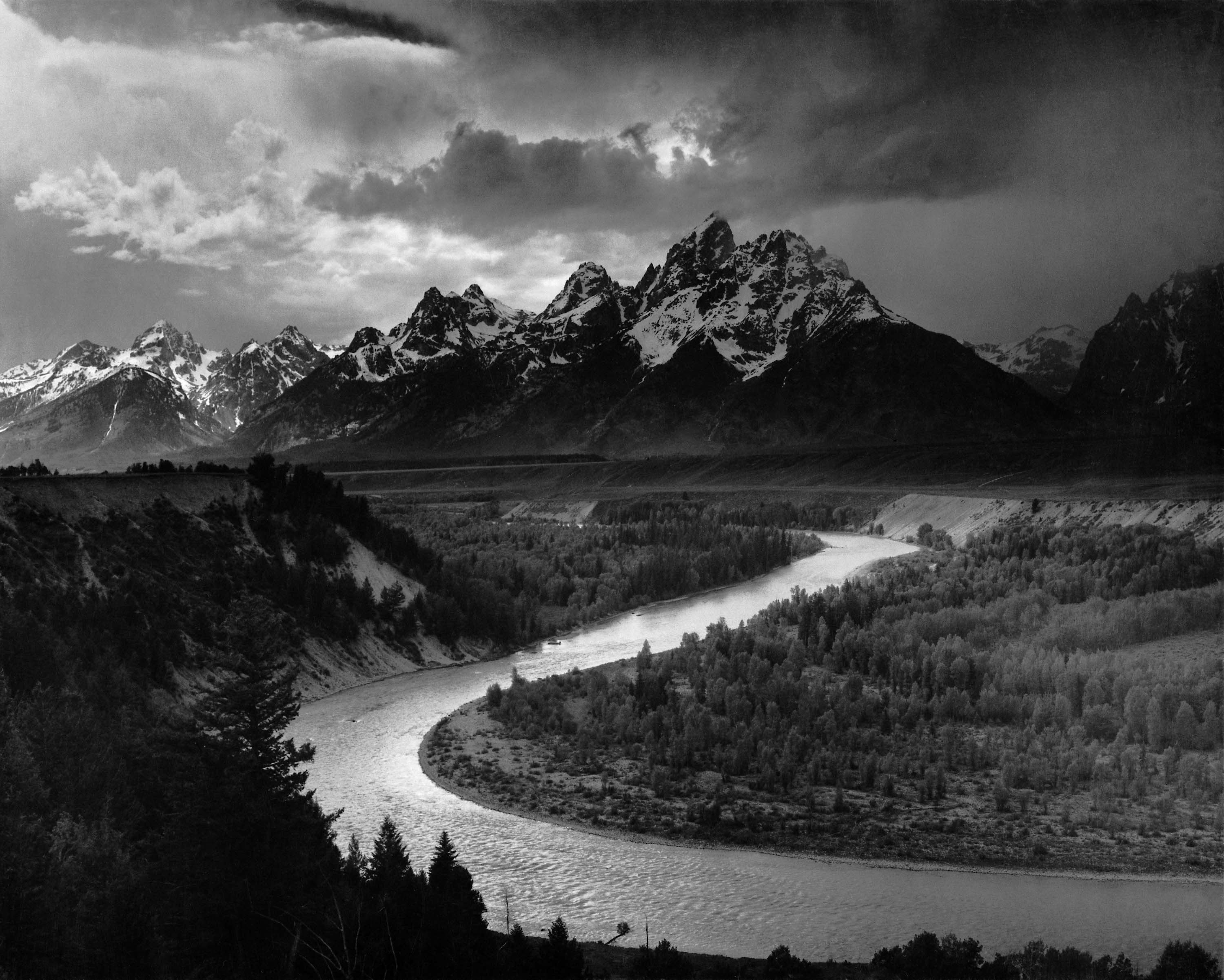
I always have the same reaction to his work. At first I am wowed by the beauty of nature depicted in his photos, but then I realize that it is not really nature that I'm seeing -- at least not in the way that an Ansel Adams photograph is about nature. There is too much human ingenuity and manipulation out front and in your face; you just don't see patterns like these in the real world. Rather his art is almost a form of abstract design, using "nature" both as the medium and the topic.

Anyway, he's fantastic. There are any number of places to see his work online, such as here or here or here.

A fun side note is that Andy Goldsworthy seems to be the inspiration for a lot of the visual design of Spike Jonze's adaptation of Where the Wild Things Are (which was really good, by the way). For example, see this photo or the structure glimpsed fleetingly at 1:30 in the movie trailer.

Monday, October 19, 2009

Old Crow Medicine Show

A few weeks ago we expeditioned ourselves across the bay to Hardly Strictly Bluegrass, a gigantic free concert in Golden Gate Park. The goal was to hear Neko Case play and then meetup with some friends for the closing show. But due to a titanic public transit fail (involving a very slow, very crowded bus and a surprisingly large number of drunken Brits), we missed Neko.

Argh. Very sad. (But of course no show is ever truly missed when you have youTube).

Anyway, we did find friends and we did catch Old Crow Medicine Show -- a string/bluegrass band from Nashville. They were pretty fun - lots of whoopin and hollerin and instrument-swappin. They crowded together in a tight cluster in the center of a big stage, like they were used to playing in elevators and unfamiliar with all that space. (Much of that night's set is up on YT, including this.)

Good songs too. The song that caught my ear during the show was Methamphetamine. Apparently their big signature song is Wagon Wheel, which was written by OCMS based on a Bob Dylan outtake. Anyway, it's nice to discover a new band - I'll have to keep an eye out for them in the future.

Saturday, October 17, 2009

Crude

I just saw the new documentary, Crude, directed by Joe Berlinger about the lawsuit brought against Chevron on behalf of 30,000 indigenous Ecuadoreans over contamination from oil exploration. The film is quite good, probably the best and most accessible introduction to the issue that you will find, although I'm not sure in how many theaters it can be found.

The film focuses on the lawyers, particularly the American Stephen Donziger who has been pushing the suit for decades pro bono (although he stands to make a hefty sum if they win) and the Ecuadoreans Pablo Fajardo and Luis Yanza. Fajardo is the star, self-effacing but quietly charismatic -- he grew up impoverished in the oil fields, putting himself through law school at night to finally lead the legal team, in the process winning international environmental awards and getting profiled in glossy magazines. Donziger comes off as your stereotypical bossy American, although you have to admire the guy's tenacity and street smarts.

The filmmakers are clearly on the side of the locals, although they give Chevron plenty of space to (attempt to) defend their record and don't hesitate to question the motives and tactics of the plaintiffs. Their overall take on the situation is pretty similar to what we learned when we visited the region earlier this year, namely: Chevron is guilty as hell (although PetroEcuador is no angel either) and the prospect of a $27 billion payout has prompted them to pull every trick in the book to avoid it.

The highlight of the film are the on-site inspections of the waste oil pits performed by the court-appointed expert, which serve as a forum for the lawyers to go toe-to-toe. Fajardo presses his case amplified by testimony from a band of local residents, while Chevron is represented by a lawyer who might as well be straight from central casting. Great courtroom drama from the middle of a rainforest.

Anyway, well worth seeing. Here's the trailer.

Thursday, October 15, 2009

Blog Action Day!

Today is Blog Action Day and the focus is on climate change. At this very instant I don't have anything deep to say about global warming except this: the U.S. is contemplating a complete restructuring of our energy system to address a very serious, but slow-moving, problem. On the crazy off-chance that the science is wrong and climate change isn't really a big deal what is the downside to having restructured our energy system away from fossil fuels and toward renewables? Not so much, really.

UCS's latest report -- Climate 2030 -- finds that policies that transition the country to a clean energy economy will end up saving people and businesses a lot of money through lower electricity bills, energy efficiency, green jobs and the like.

For those of us who live in areas with crappy air quality, reducing conventional air pollution (a potential side benefit of greenhouse gas reductions) could save tens of thousands of lives annually. Yes, that disgusting brown air actually does kill people, mostly via heart attacks and respiratory illnesses. And if you're worried about our dependence on foreign oil or happen to live near a mountain-top removal coal operation, this one is a no-brainer too.

Anyway, for more climate blogging I suggest checking out Dave Roberts, Joe Romm and Andy Revkin. Or check out this really interesting post on the climate impact of your wardrobe.

Sunday, September 27, 2009

Not infinite, but without end

I finally finished Infinite Jest, all 1079 densely-packed pages of it. Here's my review, cross-posted from goodreads. Some abstract, mild SPOILERS below - nothing specific that would ruin the book for someone (but avoid clicking the links).

--
Lo in the distant past, my cousin gave me David Foster Wallace's mondo-opus Infinite Jest for xmas. Since then it has lived on my shelf intimidating the other, littler books and taking their lunch money. I started to read it once and got through about 100 pages before my head of steam ran out. Pretty sure I've moved 10 apartments since and lugged IJ with me each time. So when I saw a bunch of folks were organizing an online reading group called Infinite Summer I figured, well, now or never.

Now having finished I think I can say I loved it. Not everything works, but when it does it is pretty memorable. The book demands a lot: the first 200 or so pages are pretty rough going and I found I could only read it when my wits were sharp or else the page-long sentences started blurring together. But once you're acclimated to DFW's strange little world and full-court-press writing style the cumulative whoosh of the plot and the words and the spiderweb of allusions becomes exhilarating.

It helps that the book is funny as hell and full of clever set-pieces (Eschaton!) that beat back the tedium. And yeah, it is tempting to call b.s. on some of his more over-written passages, but for the most part DFW uses his powers for good, not evil. He employs all his post-modern trickery in the service of a big-hearted, painfully sincere (even, sappy) story. The numerous tales of addicts bottoming-out are sometimes quite grim and desperately sad, but that only makes their slow climb to sobriety all the more compelling.

IJ is difficult, but I truly believe he meant it to be as entertaining and as humanly meaningful as possible. (As an aside, I will say that some of DFW's linguistic inventions are so good I've started using them unconsciously -- particularly the howling fantods and de-mapping.)

Finally, I hope it is not too much of a spoiler to say that the plot cuts off quite literally in the middle of the action. The novel is not infinite but it does literally have no end. The feel is of something massive and ornate--a chandelier or a grand piano--snapping its tether and falling. At first there is virtually no discernible movement, then it begins to gain a terrible speed. It glitters ominously as it rushes downward, anticipating a clamorous transformation. But the video reel cuts off just before the crash and noise.

DFW stated that the story's end "can be projected by the reader somewhere beyond the right frame." Which is true, if you carefully track the clues strewn through the book, but also a major "what the hell" moment once you turn that final page. (SPOILER-laden theorizing found here and here, among other places.)

The big idea, presumably, is that the novel's form recapitulates its themes of addiction and entertainment -- broadly, the pursuit of happiness. The abrupt ending conveys that same sense of incompleteness that returns once the buzz wears off, a longing for just one more hit. Indeed, as deeply frustrating as it is to read, a 'traditional' ending with a sense of closure would feel wrong for the novel and the protagonists. Addicts never get closure on their addictions, it is always day-to-day with the possibility of relapse.

Ultimately, I feel like I should give this like 17 stars or something. Not because it is perfect or necessarily the best novel I've ever read, but I can't but help feel tremendous respect for the story he tried to tell. Even the books flaws seem like triumphs.